New book reveals...
100 Foods Our Great-Grandparents Grew, Stored and Ate All Year Without a Refrigerator, a Freezer, or a Single Trip to a Supermarket
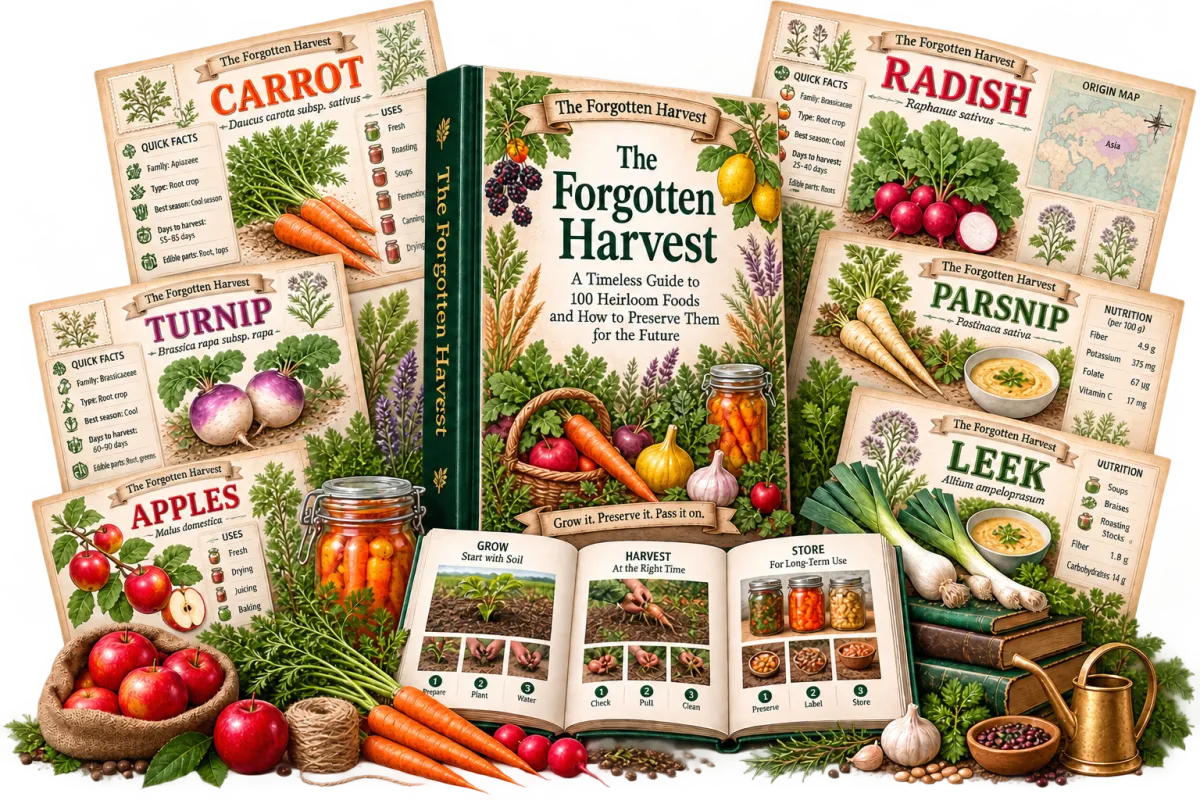
548 full-colour illustrated pages. Every food followed from the soil to the table. And most of it works even if you never plant a seed.
A Hundred Years Ago, Almost Nobody Owned a Refrigerator But Somehow Households Still Ate All Winter
No freezer, no supermarkets and definitely no delivery.
What a household had instead was a sand box in the cellar, a jar of lime water on the shelf, and about forty things somebody knew by heart.
Nobody wrote it down as there was no need.
Each generation simply watched the one before it.
And in the space of about three generations, nearly all of it disappeared.
It disappeared because somebody worked out that a person who can feed themselves stops paying every week.
Good News: We Spent Two Years Putting It All Back Together
The Forgotten Harvest is 548 pages of the food knowledge that ran a household before supermarkets existed.
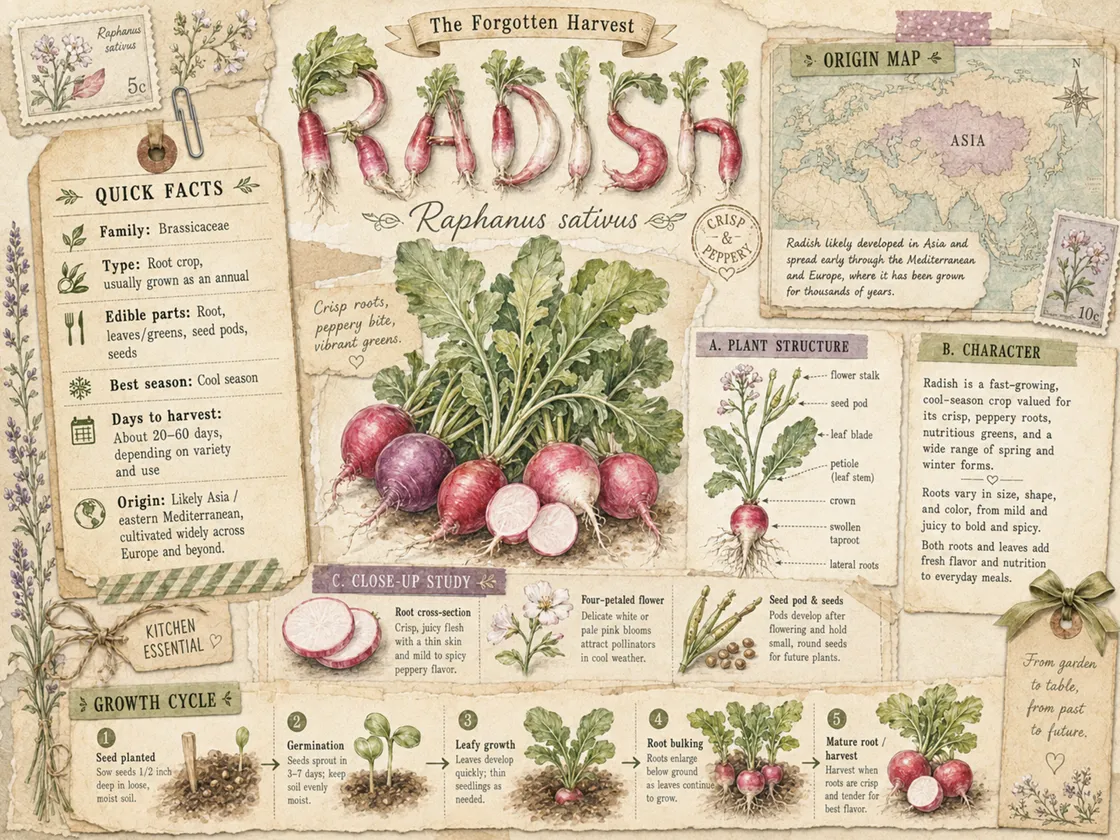
100 whole foods. Every one of them illustrated by hand.
And every single one followed through the same four steps: how to grow it, when to pick it, how to keep it, and how our great-grandparents actually used it.
Not a gardening book that stops at harvest or a cookbook that starts at the plate.
The whole loop — the way a working household saw it.

Here's a Small Taste of What You'll Find Inside
It covers only real, whole foods that store for months or years without a refrigerator
This forgotten food knowledge is so organized that anyone, even someone who has never grown a plant or stored a jar of food in their life, can pick it up and use it.
Everything is explained in a clear, step-by-step way, using full-color pictures and simple instructions you just follow.
With all 100 forgotten foods and old storage secrets, The Forgotten Harvest is the one book that puts a fully self-reliant household back on your shelf.
You'll also see exactly how to grow each food, when to pick it, how to store it with no power, and how our great-grandparents used it, so you're never left guessing at any step.
My goal with The Forgotten Harvest is simple: to put this knowledge back into as many homes as possible, so no matter what happens to prices, empty shelves, or supply chains, you and the people you love always have enough, without ever depending on a store again.
It covers only real, whole foods that store for months or years without a refrigerator
This forgotten food knowledge is so organized that anyone, even someone who has never grown a plant or stored a jar of food in their life, can pick it up and use it.
Everything is explained in a clear, step-by-step way, using full-color pictures and simple instructions you just follow.
With all 100 forgotten foods and old storage secrets, The Forgotten Harvest is the one book that puts a fully self-reliant household back on your shelf.
You'll also see exactly how to grow each food, when to pick it, how to store it with no power, and how our great-grandparents used it, so you're never left guessing at any step.
My goal with The Forgotten Harvest is simple: to put this knowledge back into as many homes as possible, so no matter what happens to prices, empty shelves, or supply chains, you and the people you love always have enough, without ever depending on a store again.
The Damp Sand Box That Keeps Carrots Crisp From October Until March
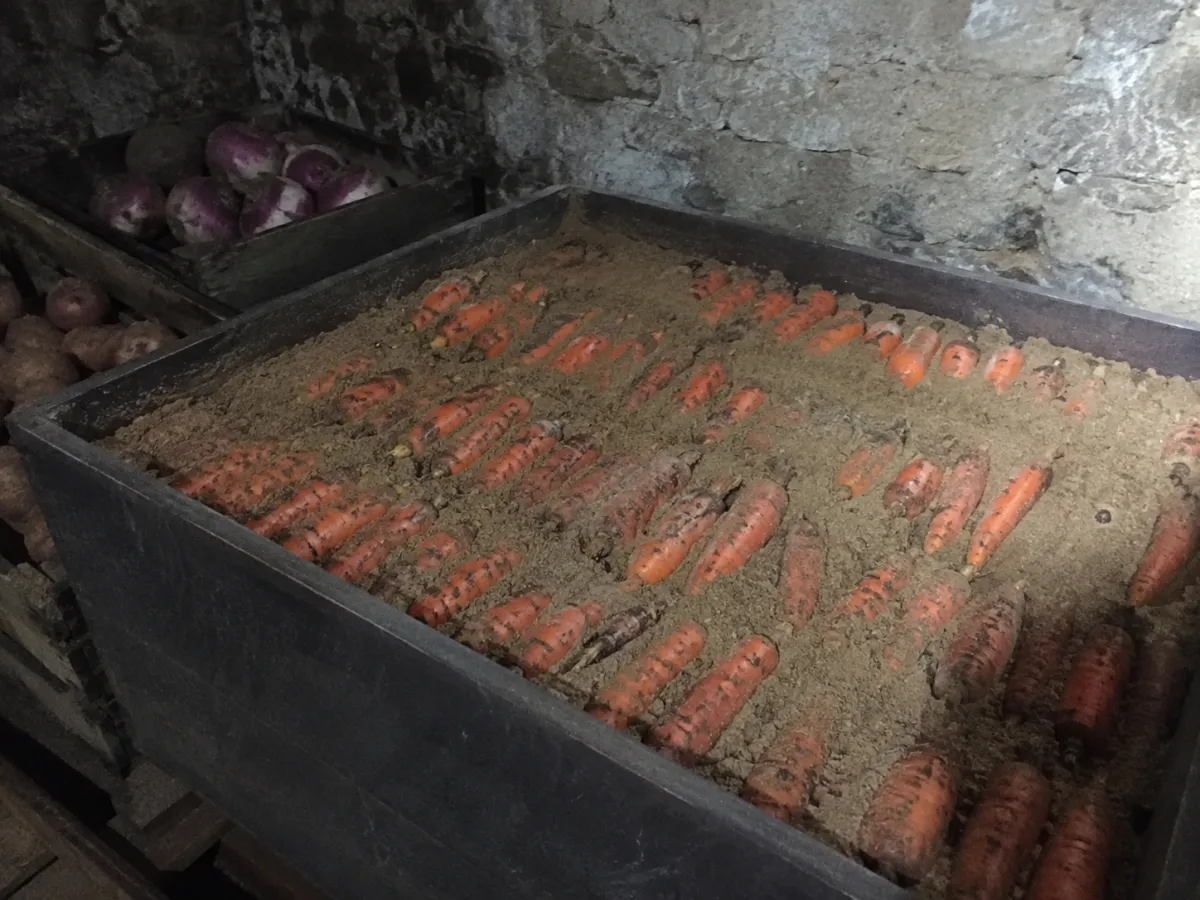
You'll learn how farmhouse households packed carrots in damp sand and buried them below the frost line.
No electricity, no chemicals. Literally nothing but sand and cold.
Done properly, one autumn harvest of carrots, beets, parsnips and turnips stays firm and sweet for four to six months.
You'll find the exact method on page 1 of the Root-Cellar section — including the four signs that tell you a root is ready to lift.
The Lime-Water Jar That Kept Eggs Fresh for 8 Months Without Refrigeration
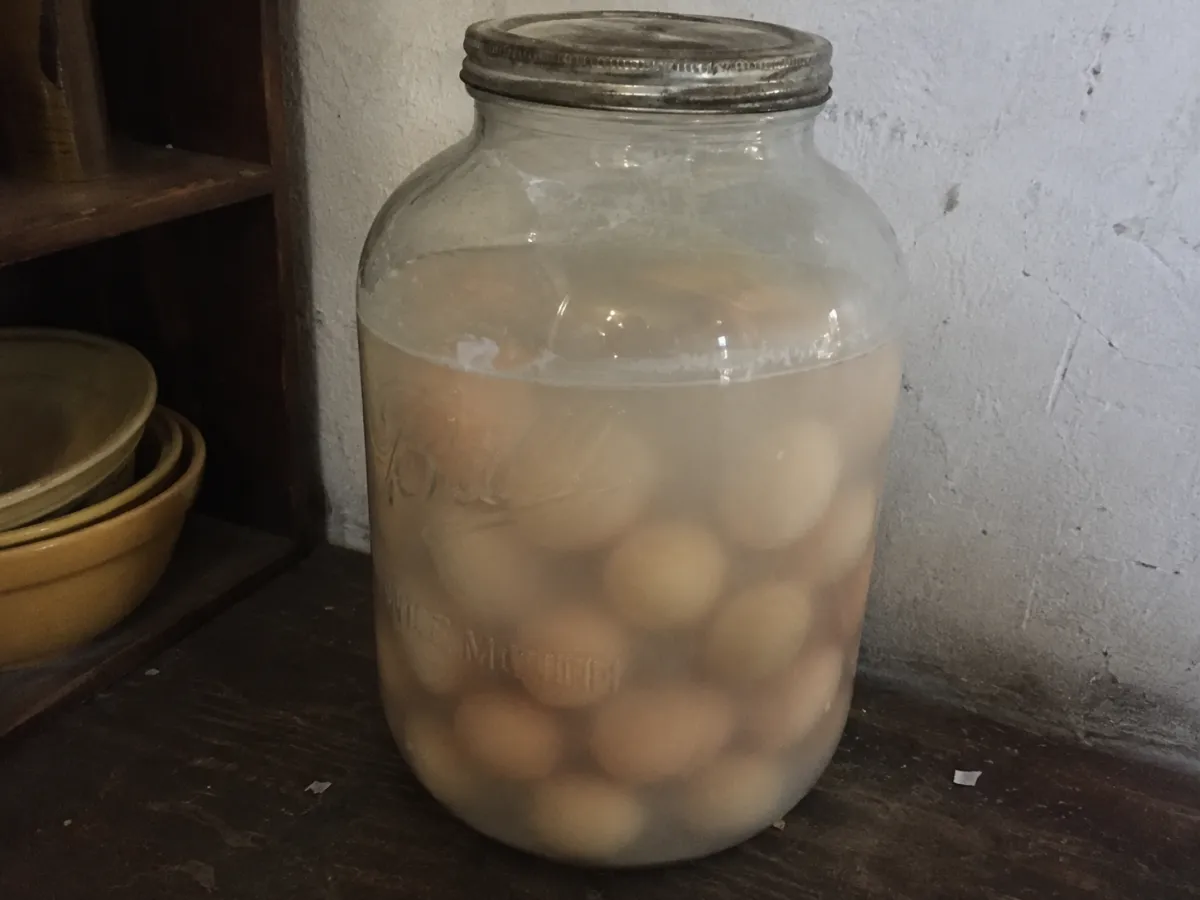
You'll also discover the lime-water jar method.
Clean, unwashed eggs, laid down in a simple lime-and-water solution, keep at room temperature for six to eight months.
Households leaned on it for generations before refrigeration was reliable.
We've given it four full pages, step by step, so you can do it this weekend.
The Braided Rope of Onions That Hung in Every Farmhouse Kitchen
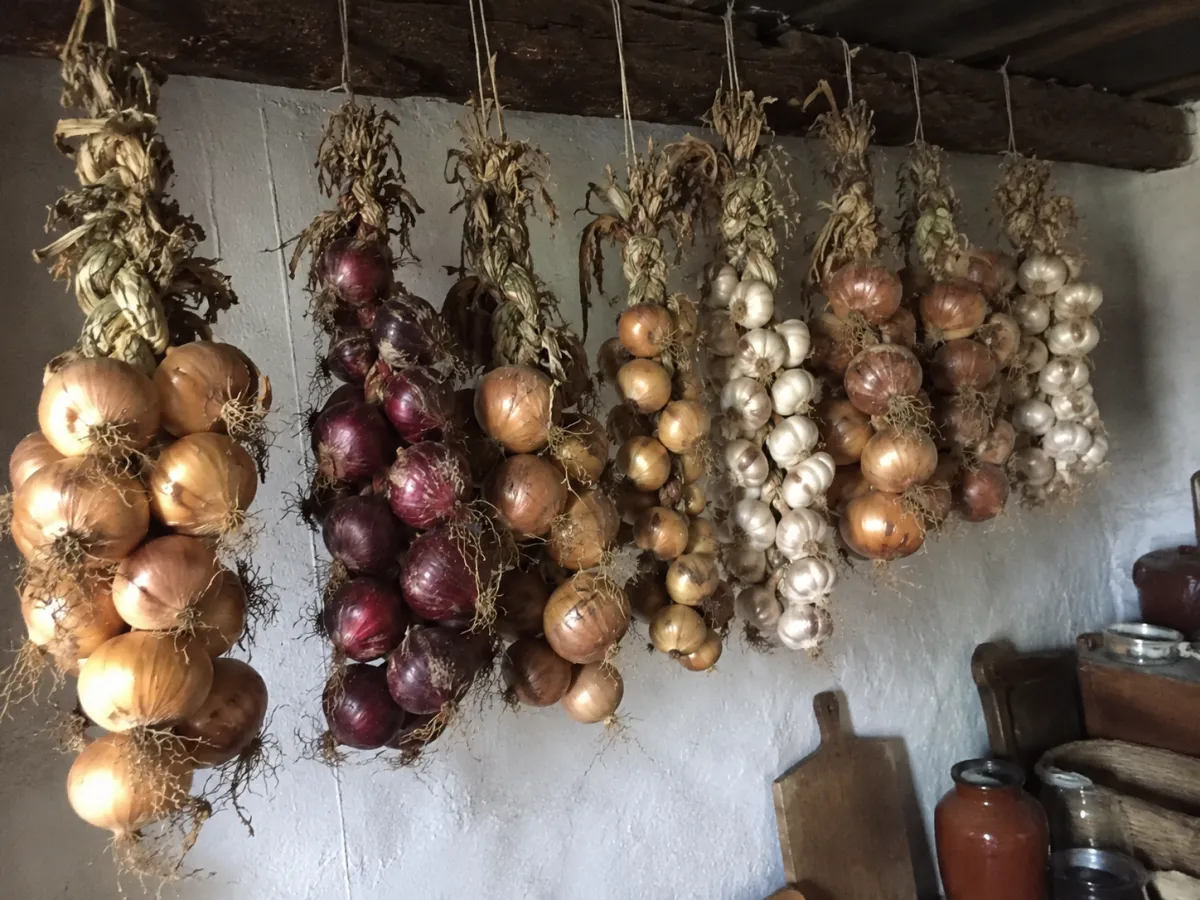
You'll also learn why old kitchen photographs always have onions hanging from a beam.
Cured and braided the right way, onions, shallots and hardneck garlic keep in a cool, dry pantry for six to eight months.
You'll learn the curing window, the braiding method, and which varieties keep longest.
The 10 Greens That Grow Back Every Single Time You Cut Them
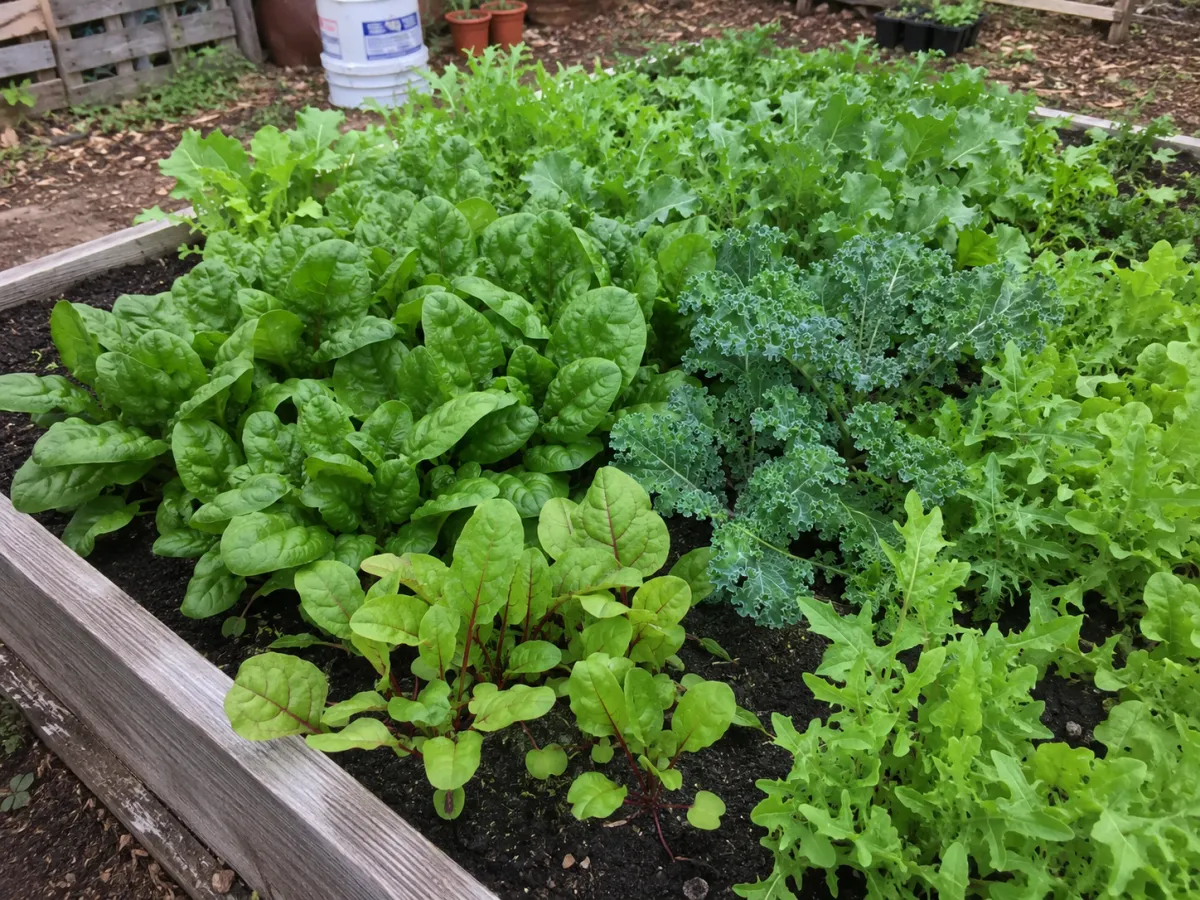
I'll show you how to sow once and harvest four times.
Spinach, kale, chard, sorrel, mustard greens, watercress and four more will regrow after every cutting.
That's more food from less ground than anything on a supermarket shelf.
It works on an acre and works on a windowsill.
The 12 Foods You Can Seal in a Bucket Today and Still Eat in 2056
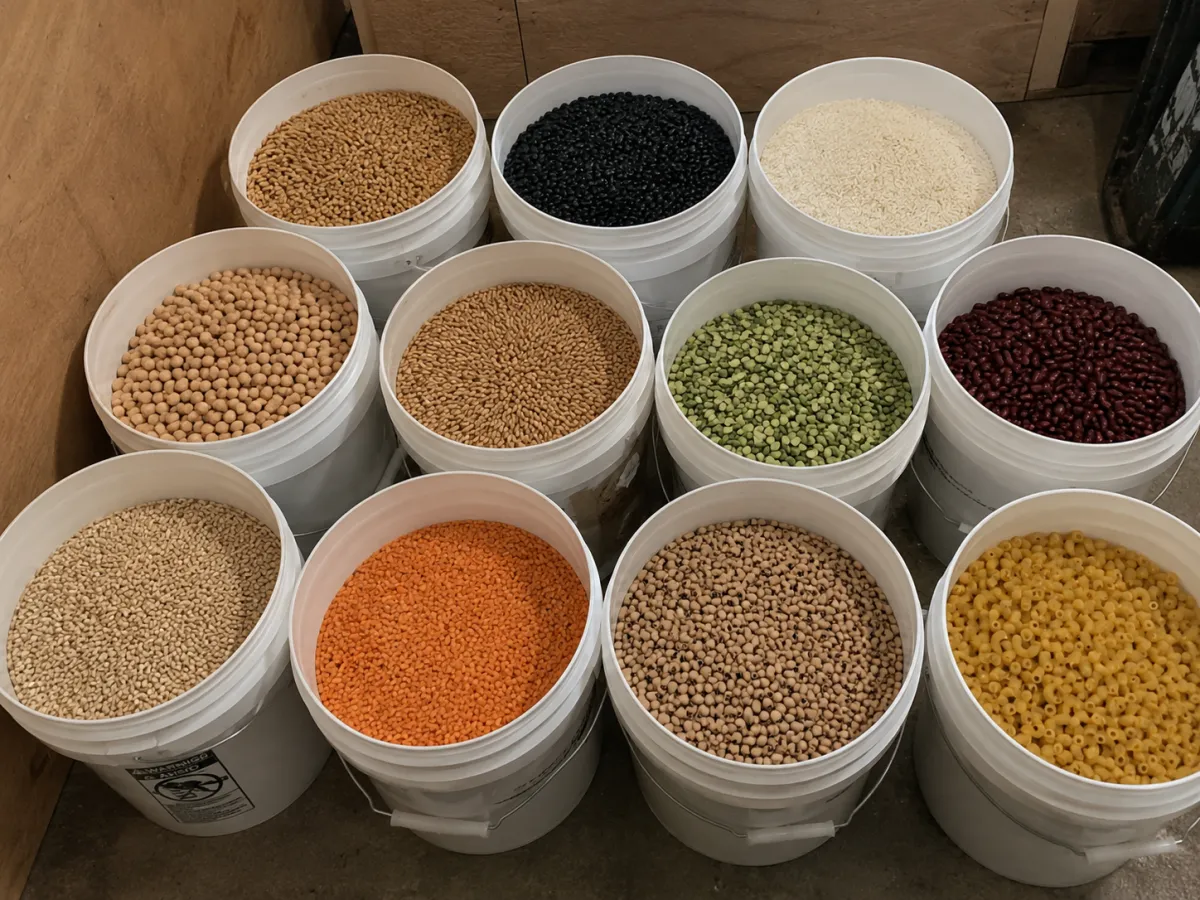
I'm also going to give you a short list of ordinary staples keeps for twenty-five to thirty years.
Wheat berries. White rice. Chickpeas. Black beans. Lentils. Split peas.
They cost almost nothing.
They're in every supermarket right now.
You'll get all twelve, with the exact storage conditions each one needs.
The One Food in Your Kitchen That Never Spoils
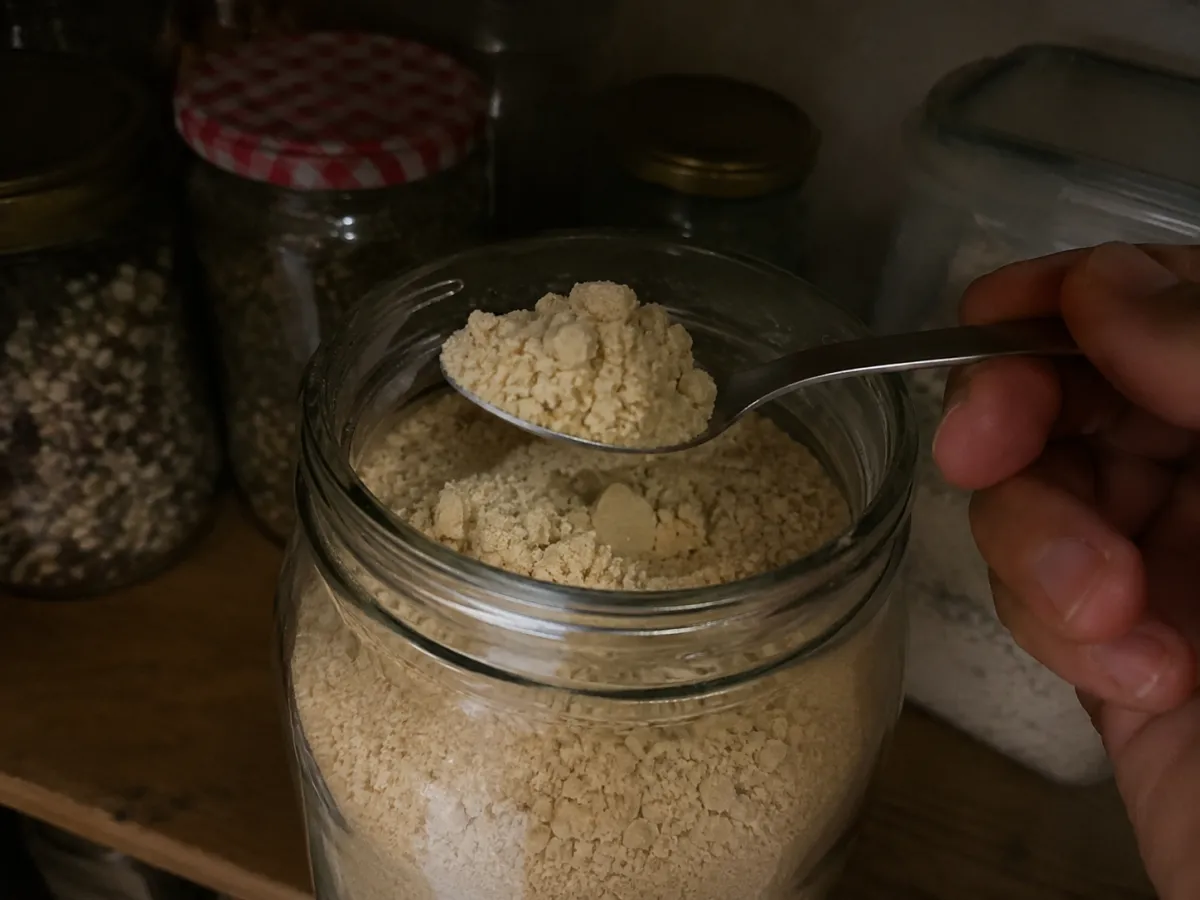
I'm going to share with you the one food that never spoils...
Archaeologists have found it in tombs, thousands of years old, still edible.
It's probably in your cupboard already.
You'll find out why it never goes off — and the eleven other foods that quietly outlast almost everything else in your pantry.
The Stinging Weed You Pull Up and Throw Away — That Was Once Dried for Winter
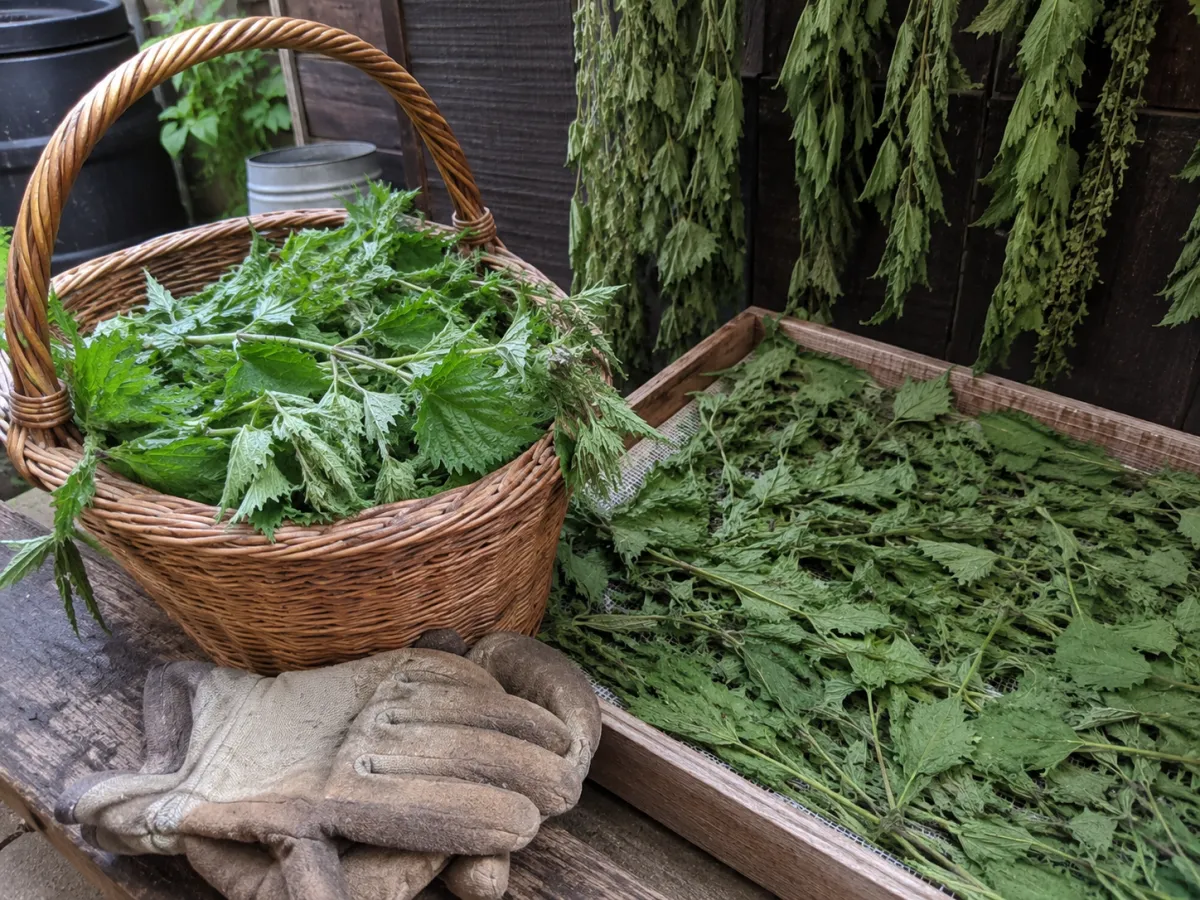
Most gardeners spend a weekend a year getting rid of it.
The old method was to cut the young tops with gloves on, before it flowered, dry them in the shade, and steep them all winter as a mineral-rich tonic.
It grows free, almost everywhere, and it's one of twenty-two plants in the Home Apothecary section.
The 8 Grocery Staples That Quietly Last a Decade
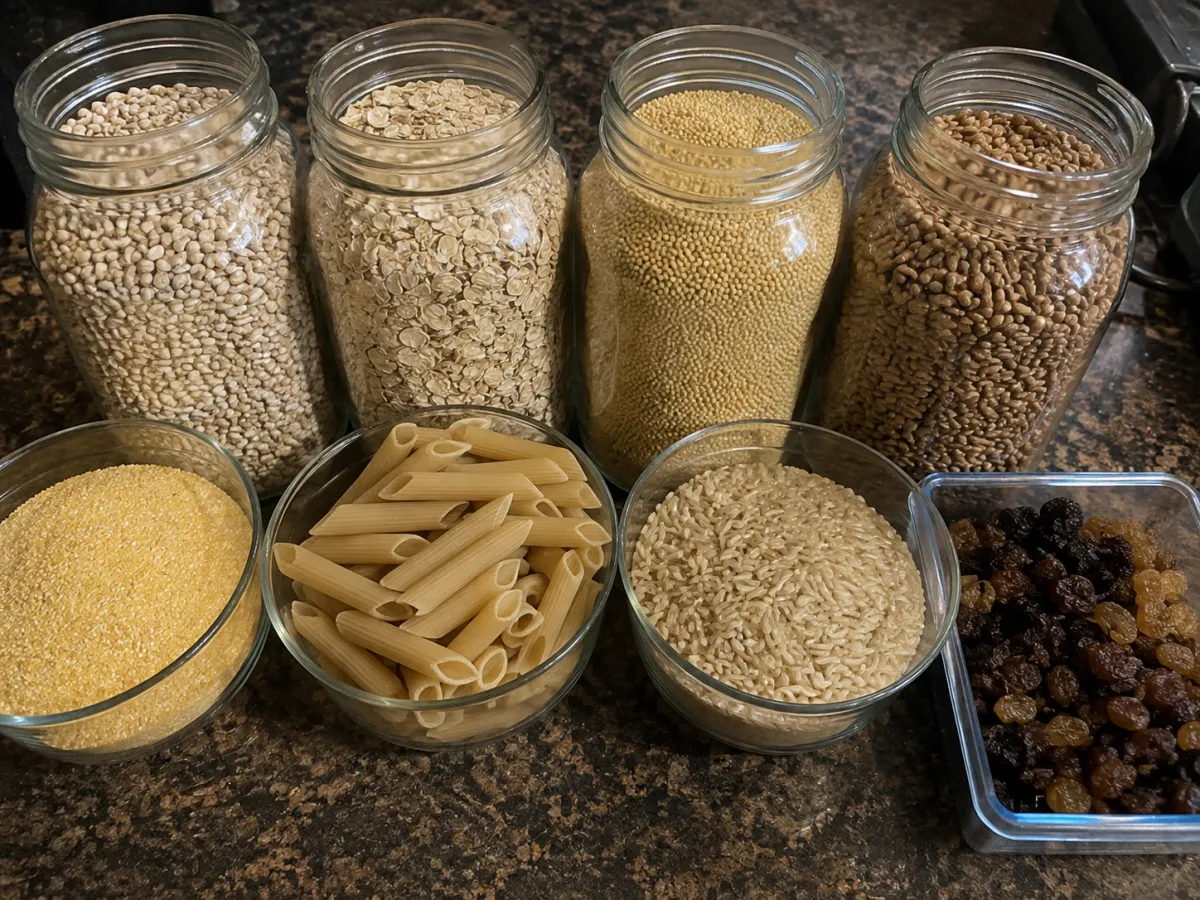
You don't need a garden for this part.
Barley, oats, millet, rye berries, cornmeal, pasta, brown rice and dried fruit will hold for five to ten years in the right conditions.
You'll learn the conditions.
Then you'll never look at the dry goods aisle the same way again.
The Summer Fruit Trick That Turns One Good Plum Tree Into a Year of Sweets
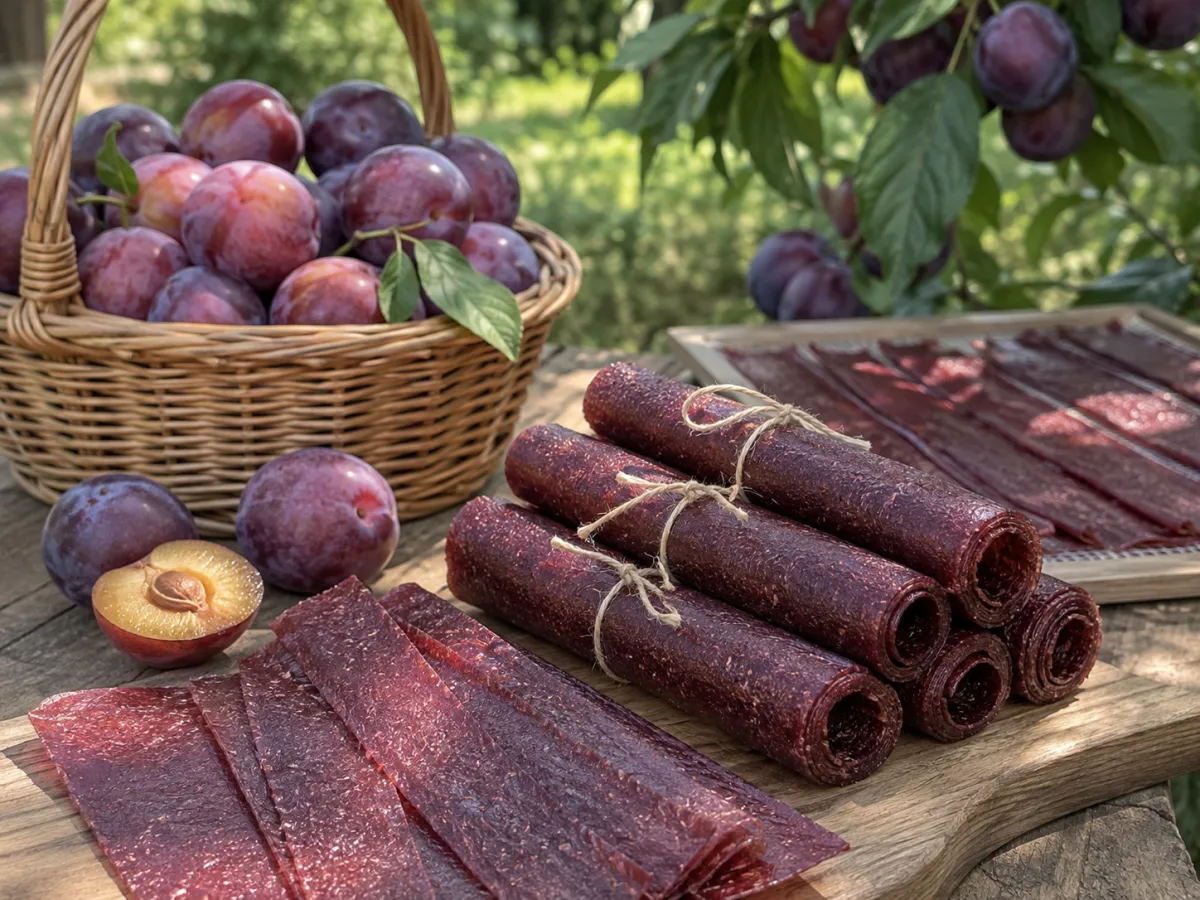
When the fruit all comes at once, most of it gets wasted.
Our great-grandparents pureed it and dried it slowly into sheets.
Fruit leather keeps for up to a year, needs nothing but low heat and time, and children eat it faster than you can make it.
Fifteen fruits, with the best combinations already worked out for you.
The 5 Foods You Can Grow on a Windowsill in Under 2 Square Feet
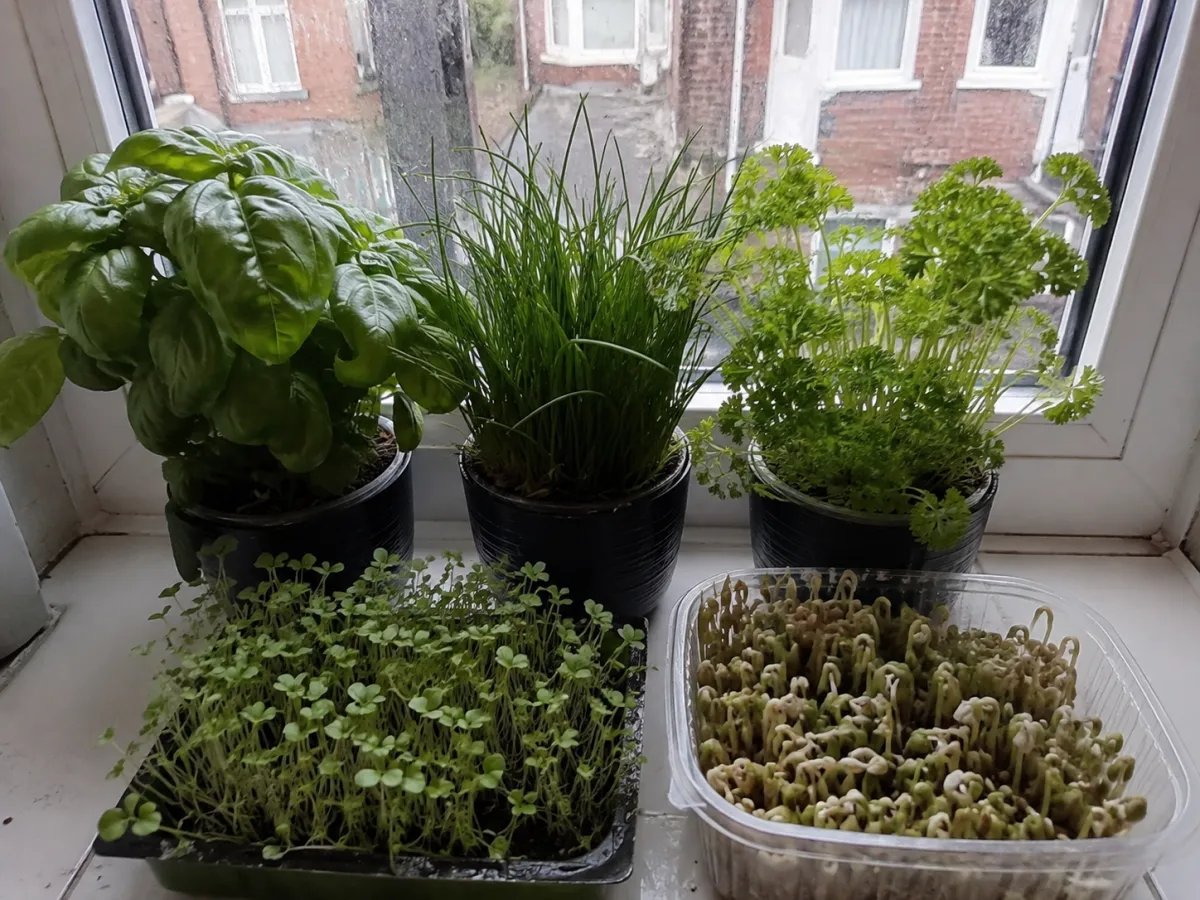
No garden, balcony or yard needed.
Two square feet of windowsill will give you basil, chives, parsley, microgreens and sprouts on rotation.
It was never about land.
It was about knowing.
The Hedgerow Berry Every Household Picked in September
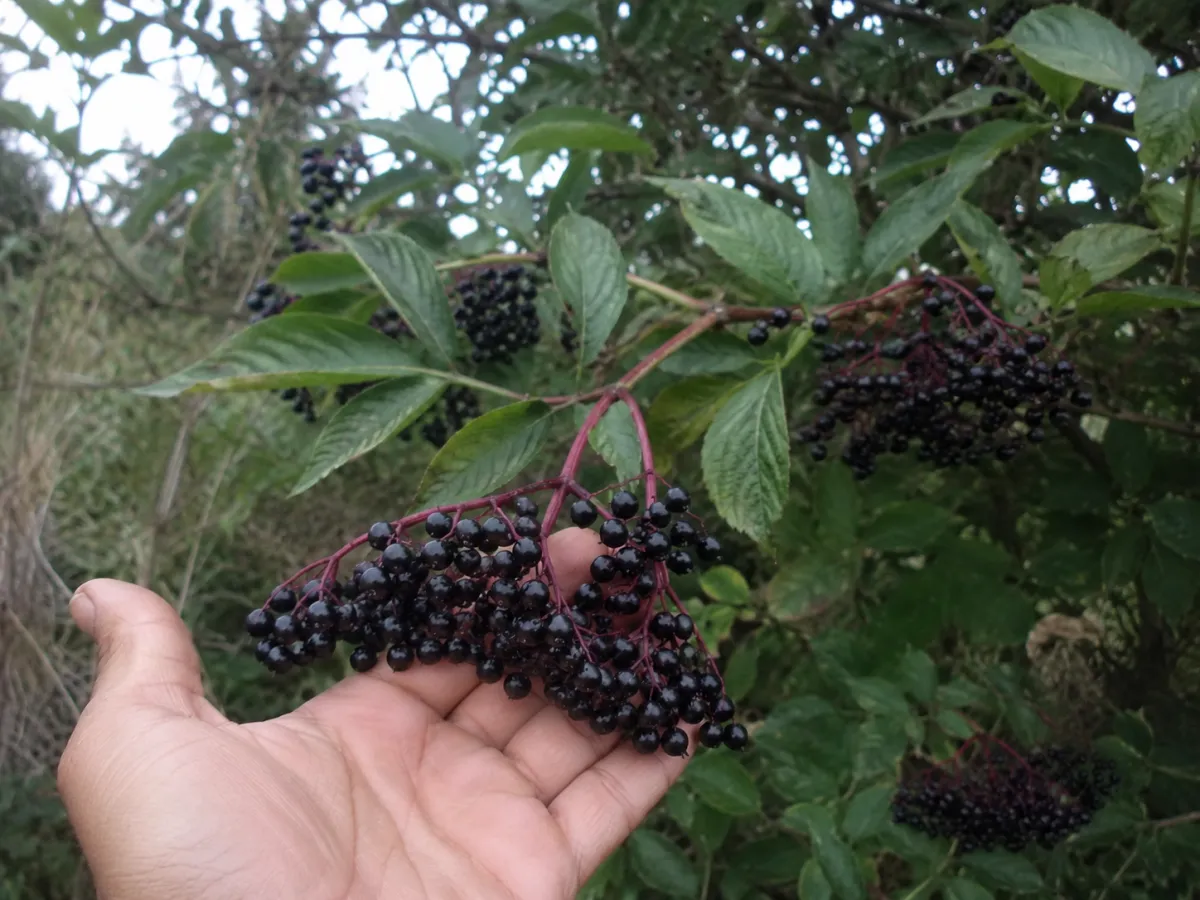
It grows wild along lanes and field edges across the country.
For generations, families gathered it every September and put it up for the winter months.
Both the flower and the berry earn a page in the Home Apothecary — with the traditional preparations our great-grandparents used.
The 18 Fruits Worth Growing — And the 3 Most People Have Never Heard Of
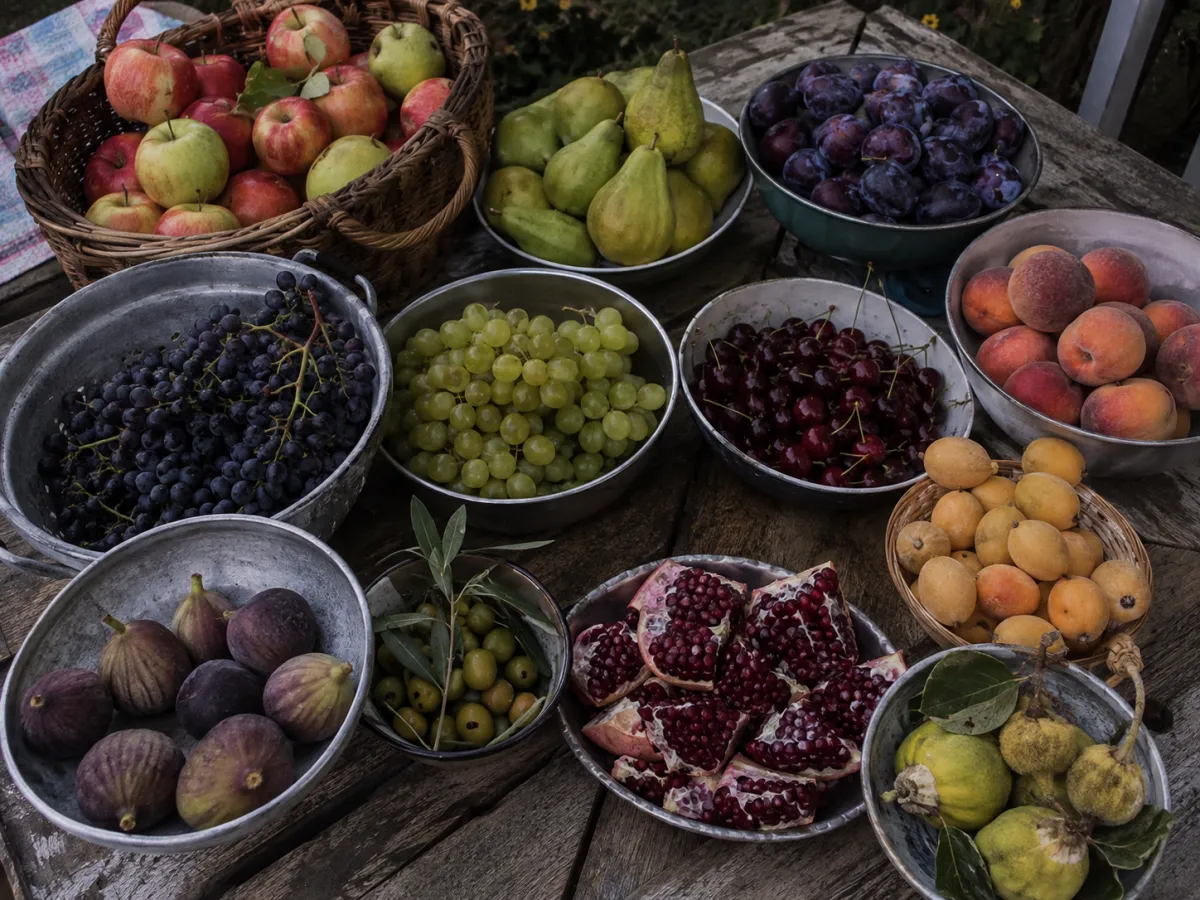
Apple, pear, plum, cherry, peach, fig, grape, olive, pomegranate.
And a handful almost nobody grows anymore — including one that fruits in winter when nothing else does.
Every one of them: grow, harvest, store, table.
The "Weed" That Sailors Ate to Stay Healthy at Sea
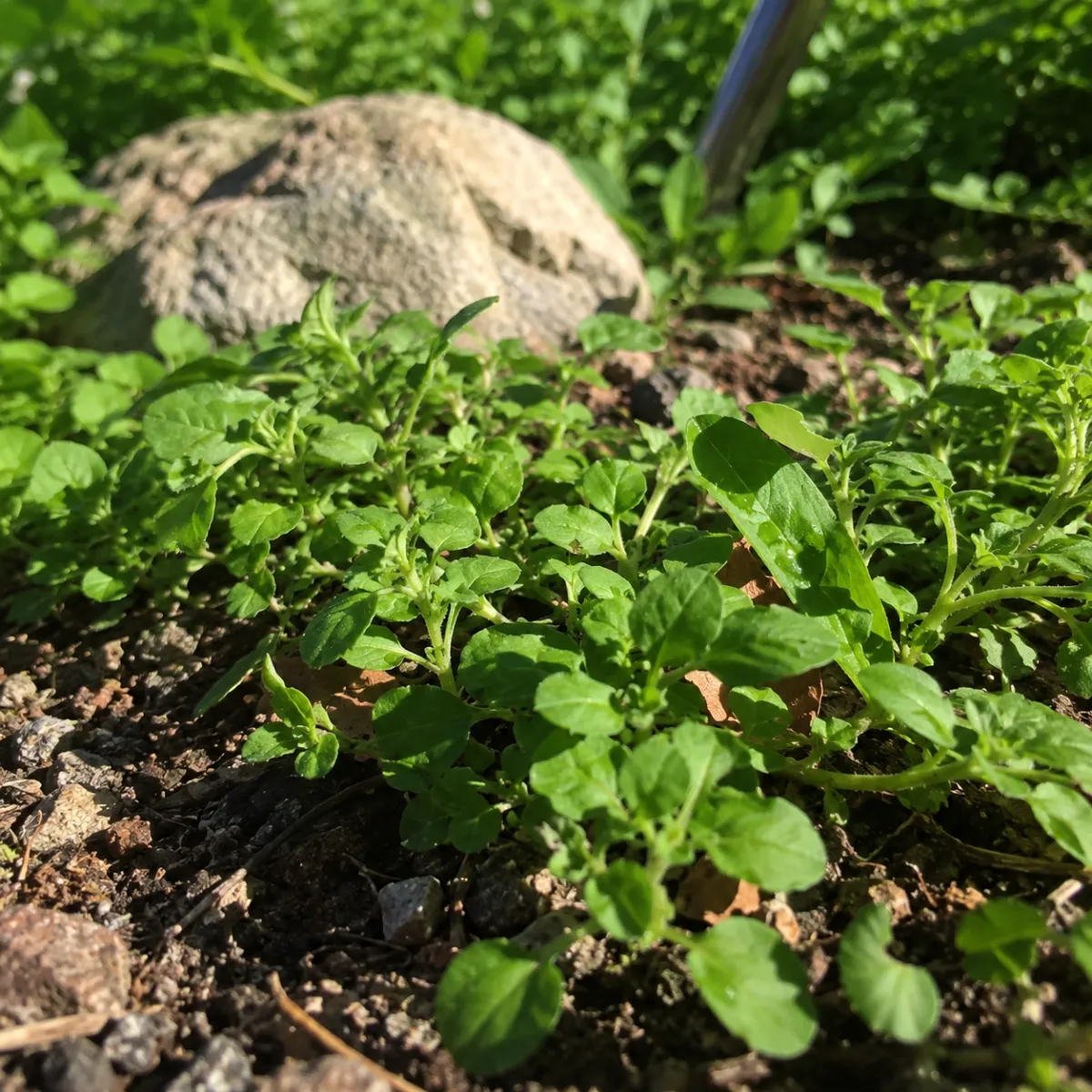
It shows up uninvited in gravel, cracks and vegetable beds.
Most gardeners spend their weekends pulling it out.
It's one of the ten cut-and-come-again greens in this book, and it has more to offer than the lettuce you paid for.
The Month-by-Month Wheel That Tells You Exactly What to Do
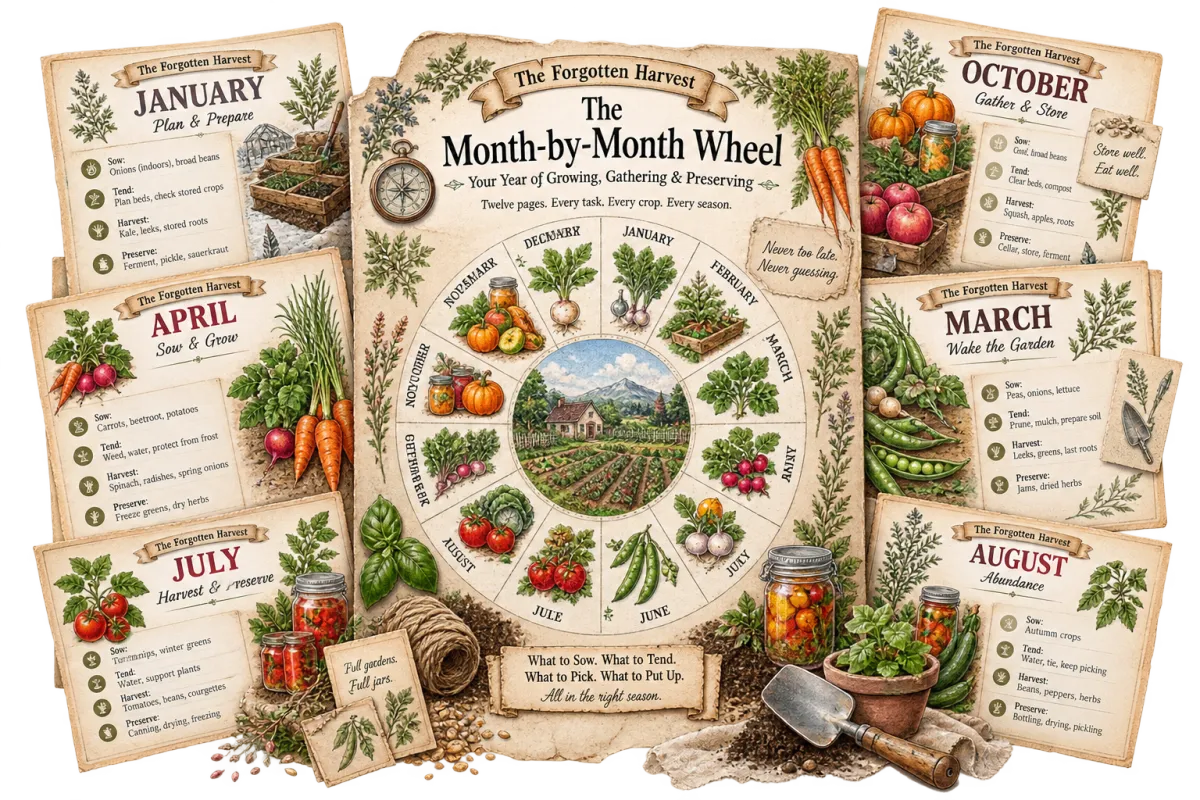
January through December, one page each.
What to sow. What to tend. What to pick. What to put up.
You are never guessing, never too late, and never scrambling in October wondering what you missed in April.
The 12 Legumes That Feed a Household for Pennies
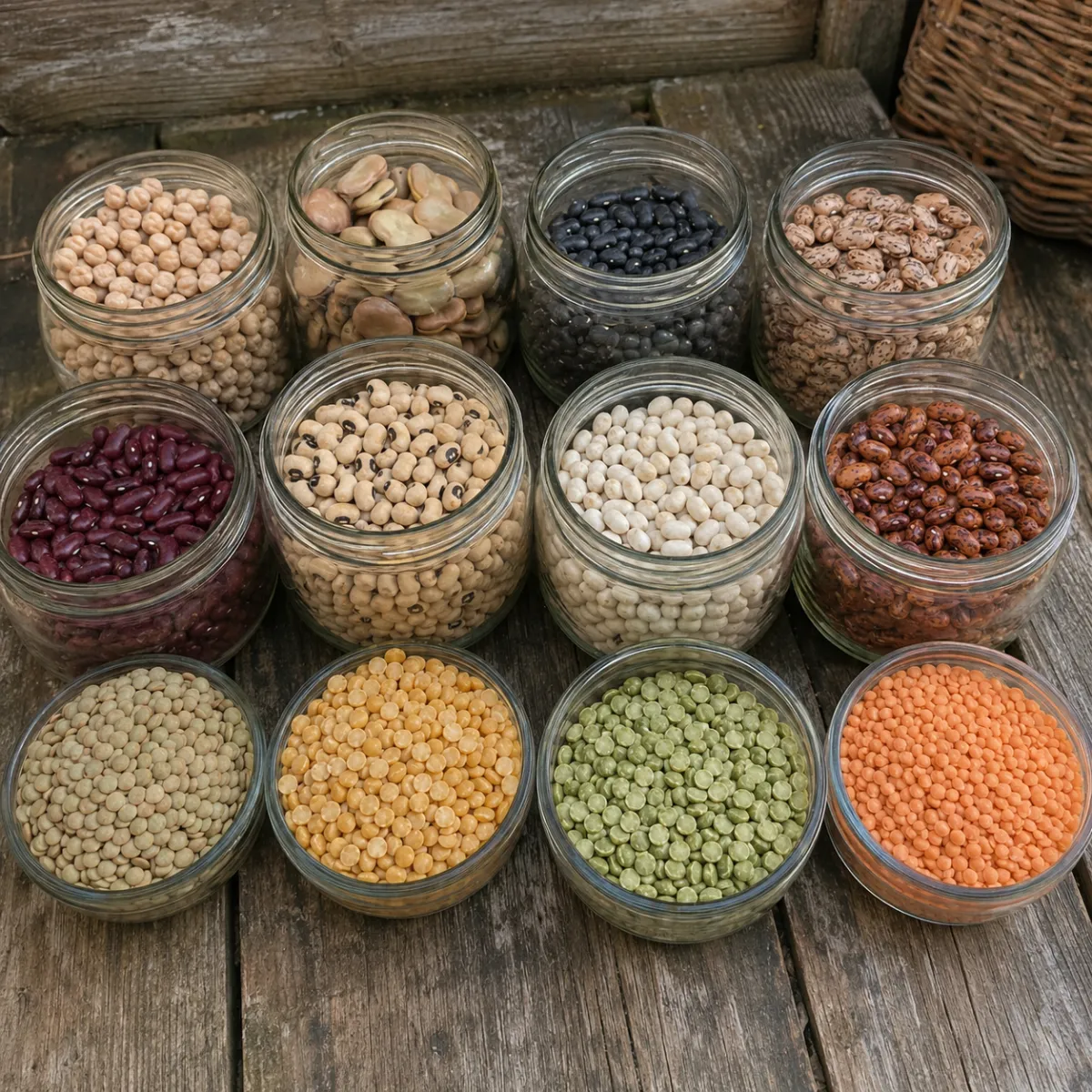
Dried beans and lentils fed more people through more lean years than any other food in history.
Black beans, pinto, navy, kidney, chickpeas, fava, lentils, split peas and more.
Cheap now.
Cheap in a crisis.
And stored properly, they'll outlast almost everything else you own.
The 22 Plants That Grew Beside Every Kitchen Door Before the Pharmacy Existed
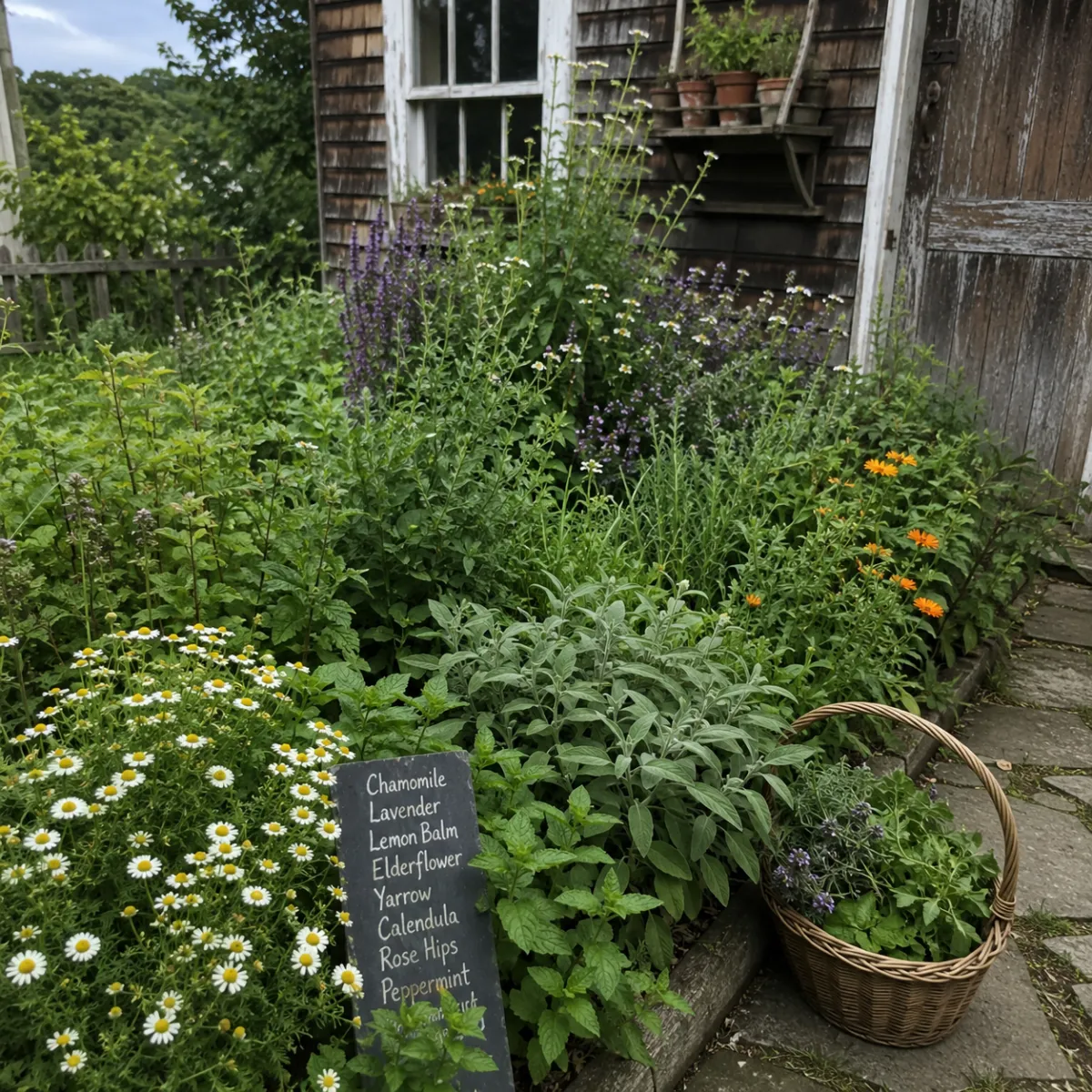
Chamomile. Lavender. Lemon balm. Elderflower. Yarrow. Calendula. Rose hips. Peppermint. Sage. Thyme.
Each one gets a full page:
What it is, which part was used, how it was traditionally prepared, how to dry and store it, and a plain-English caution where one is needed.
This is the folk-knowledge side of your own garden, gathered in one place.
The 6 Alliums That Belong in Every Kitchen and How Long Each One Really Keeps
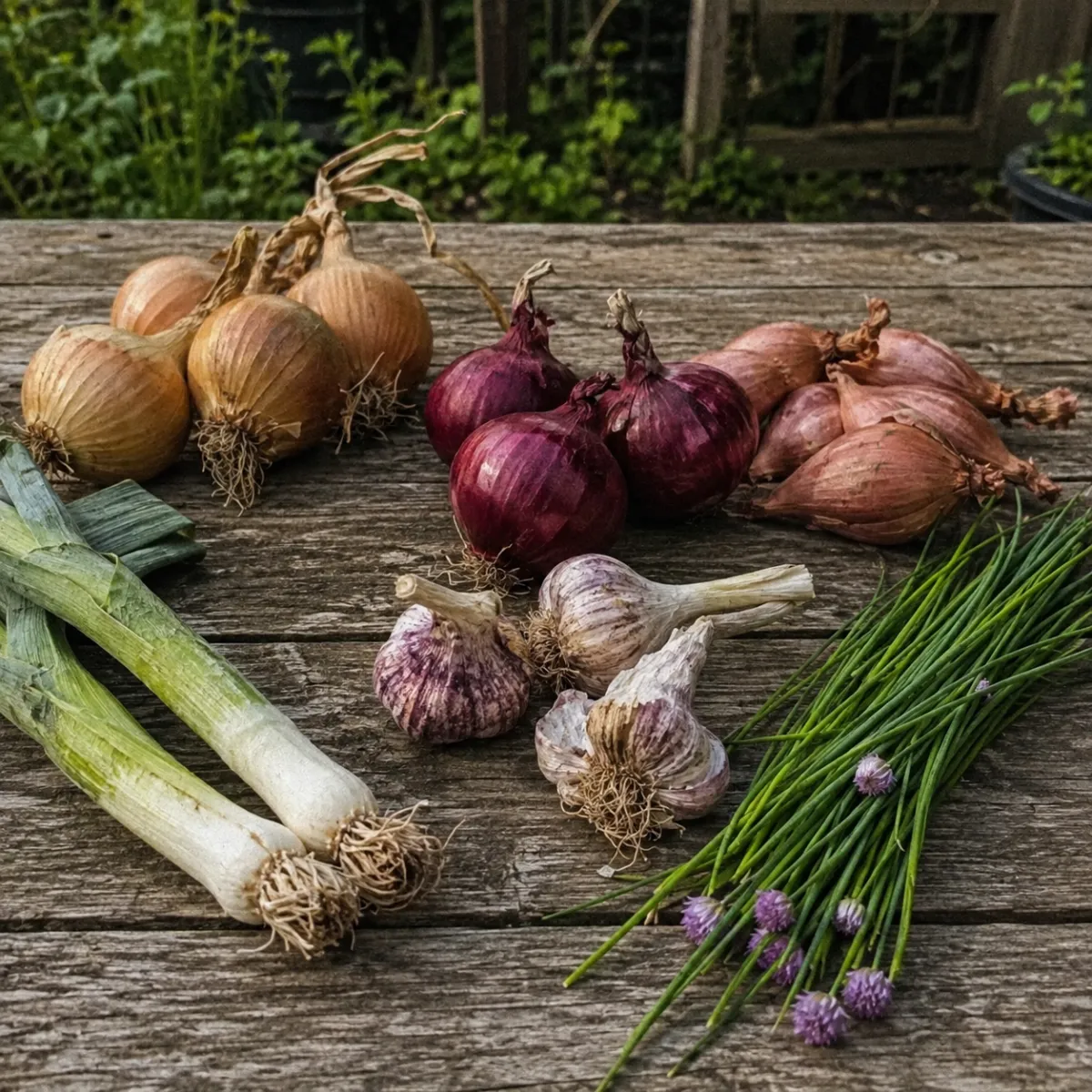
Yellow onion, red onion, shallot, leek, garlic, chives.
They run through almost every dish worth eating.
You'll learn to grow them, cure them, and keep them for the better part of a year.
The Cellar Rule That Decides Whether Your Potatoes Last 6 Months or Rot in 6 Weeks
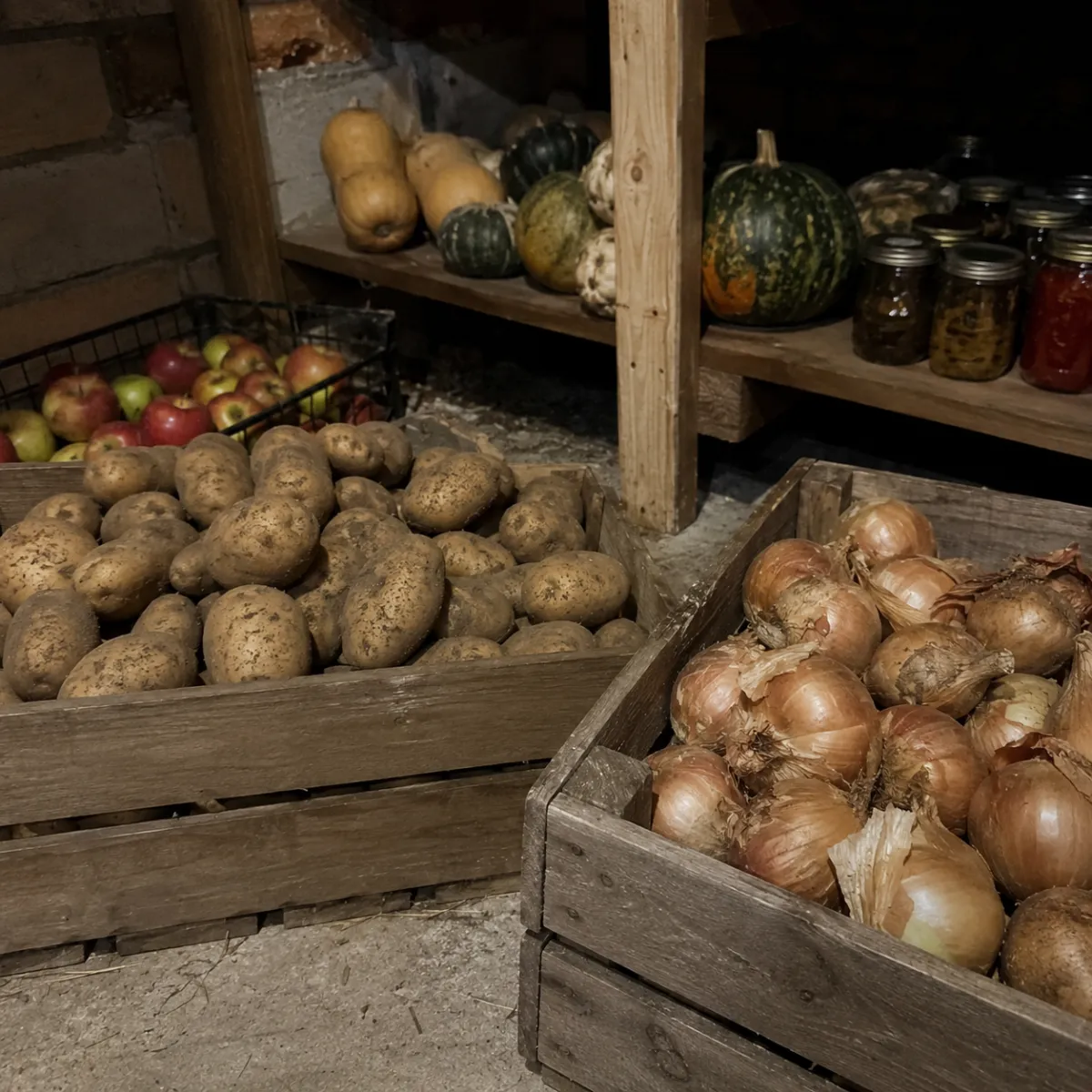
Two vegetables that should never share a shelf.
Get it wrong and you'll lose the lot.
It takes one sentence to learn and it will save you a harvest.
The 9 Grains and Seeds That Store for Decades
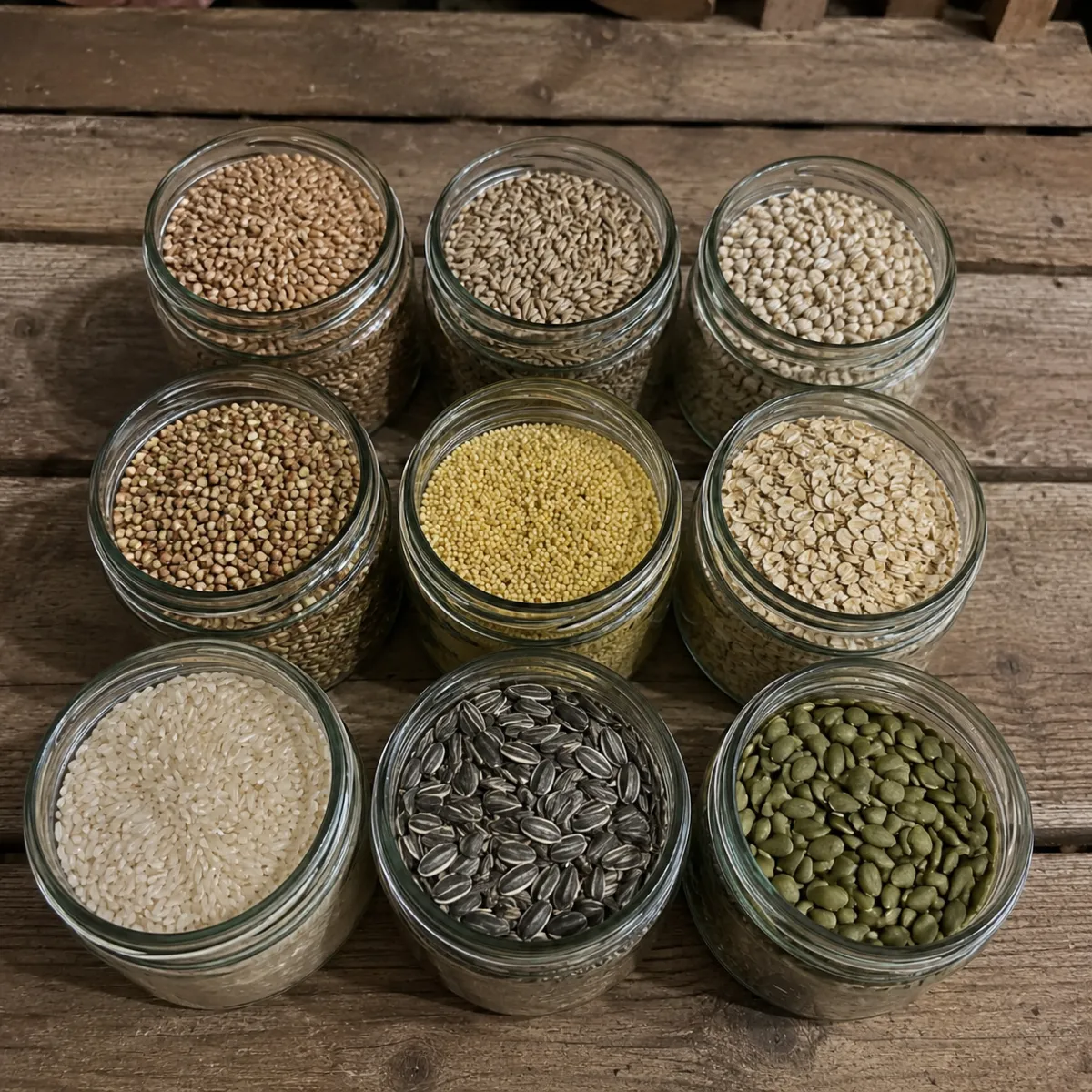
Wheat berries, rye, barley, buckwheat, millet, oats, rice, sunflower and pumpkin seeds.
This is the backbone of a larder that doesn't answer to anybody.
Grow them if you can.
Buy them if you can't.
Store them either way.
What to Do With a Glut — The Old Answer to "Too Much at Once"
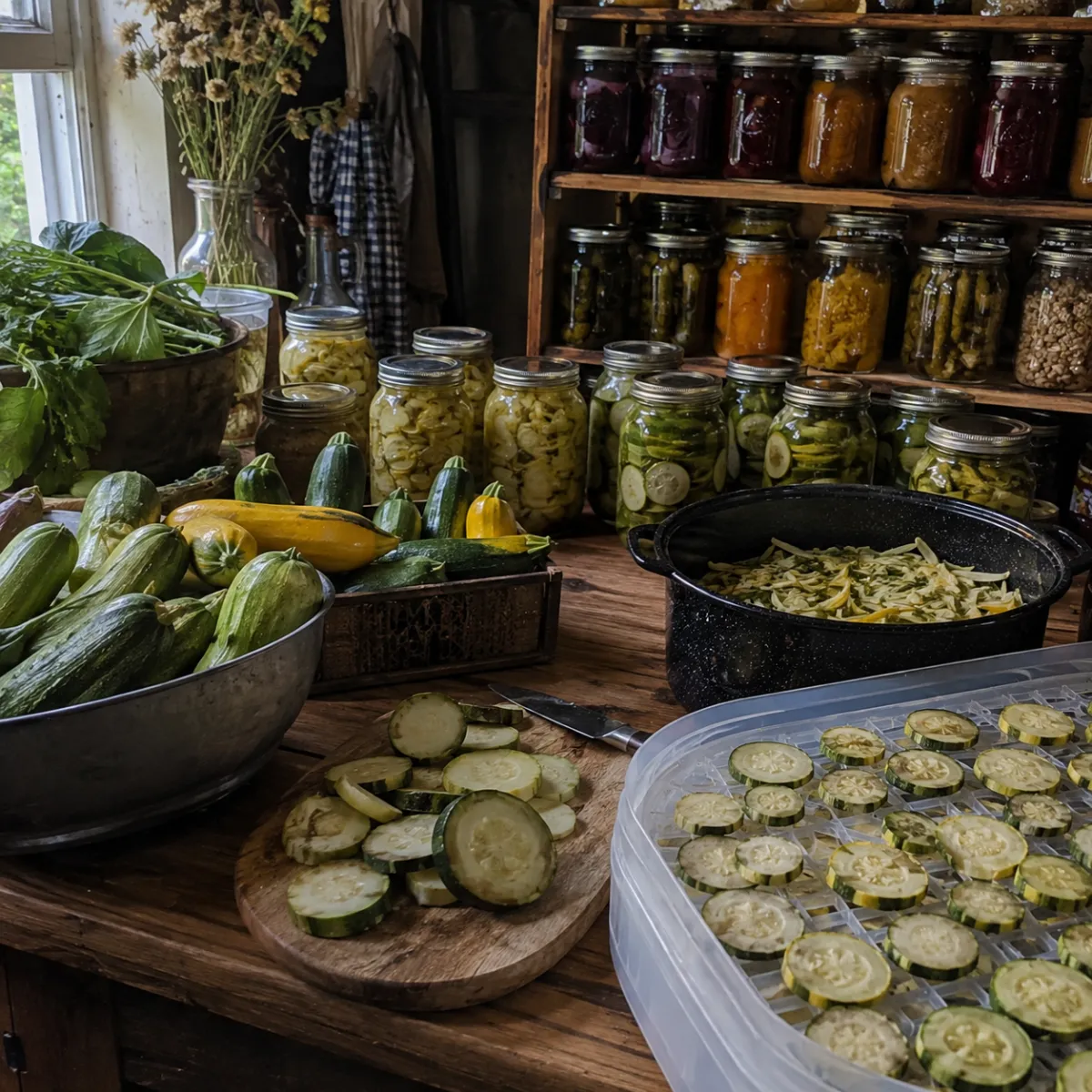
Every gardener hits the same wall. Nothing for months, then forty pounds of courgettes in a fortnight.
Older households never had this problem, because they never thought of a harvest as something to eat this week.
You'll learn the four things they did with a surplus, and which one suits each of the 100 foods.
The 19 Culinary Herbs — Fresh in Summer, Dried All Winter
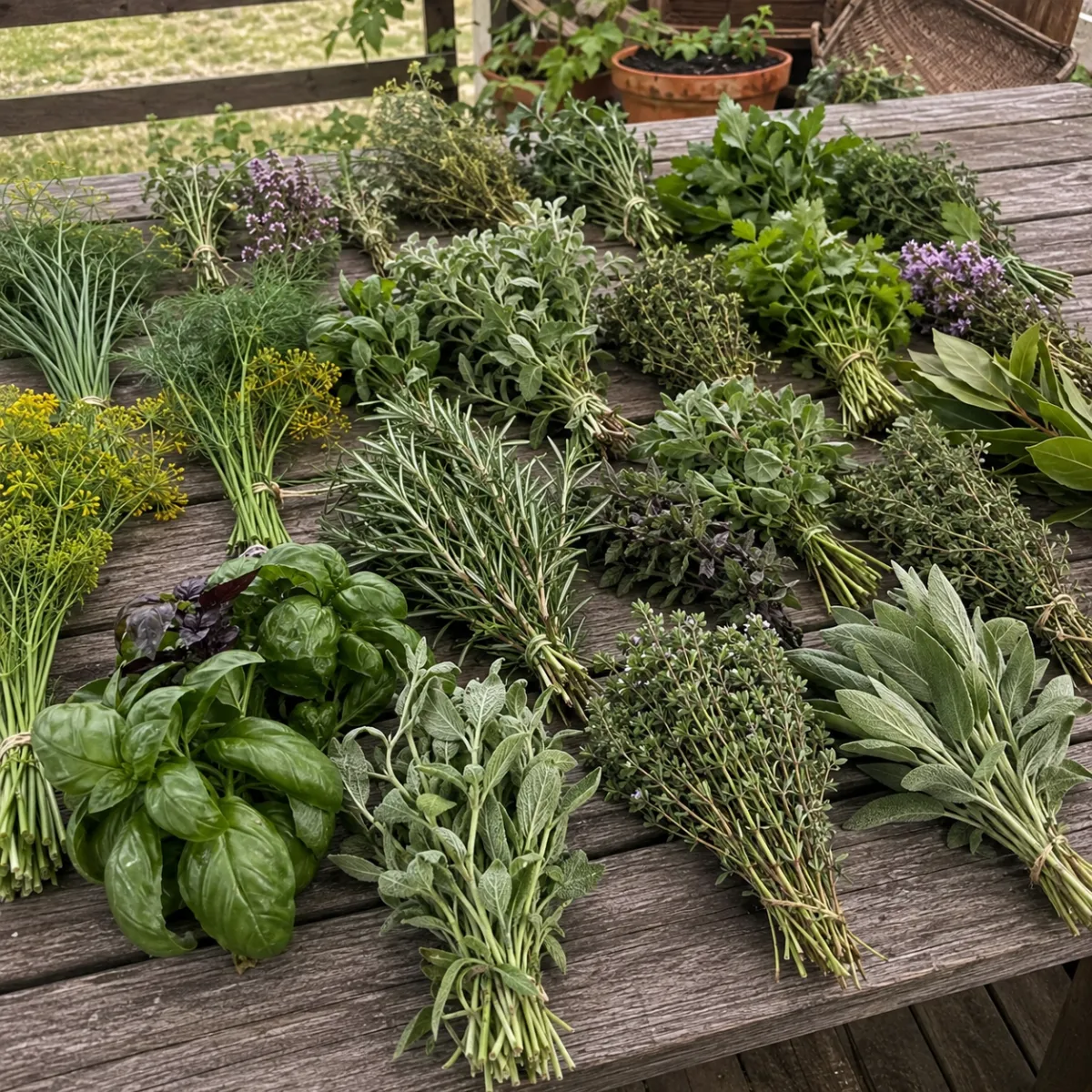
Basil, rosemary, thyme, sage, oregano, mint, dill, fennel, parsley, bay, cilantro and more.
Which to grow, when to cut, how to dry so they keep their colour and their strength.
Herbs are the cheapest thing to grow and the most expensive thing to buy.
That gap is yours to keep.
6 Real Foods in 20 Square Feet or Less
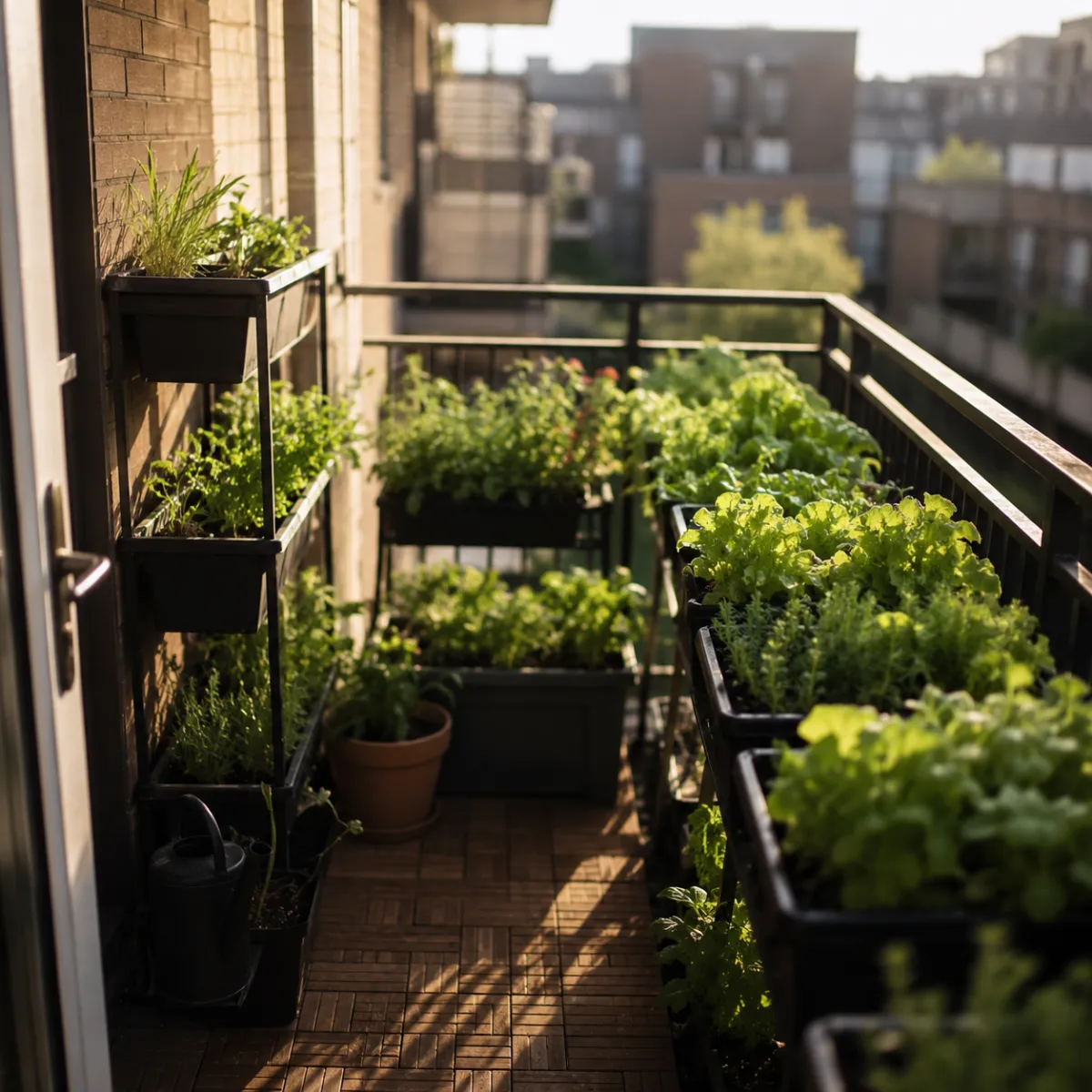
Cherry tomatoes, kale, lettuce, radish, strawberries and mint.
Containers only.
No ground required.
If you've got a balcony and a rail, you've got a garden.
What to Plant When You've Got 100 Sq Ft
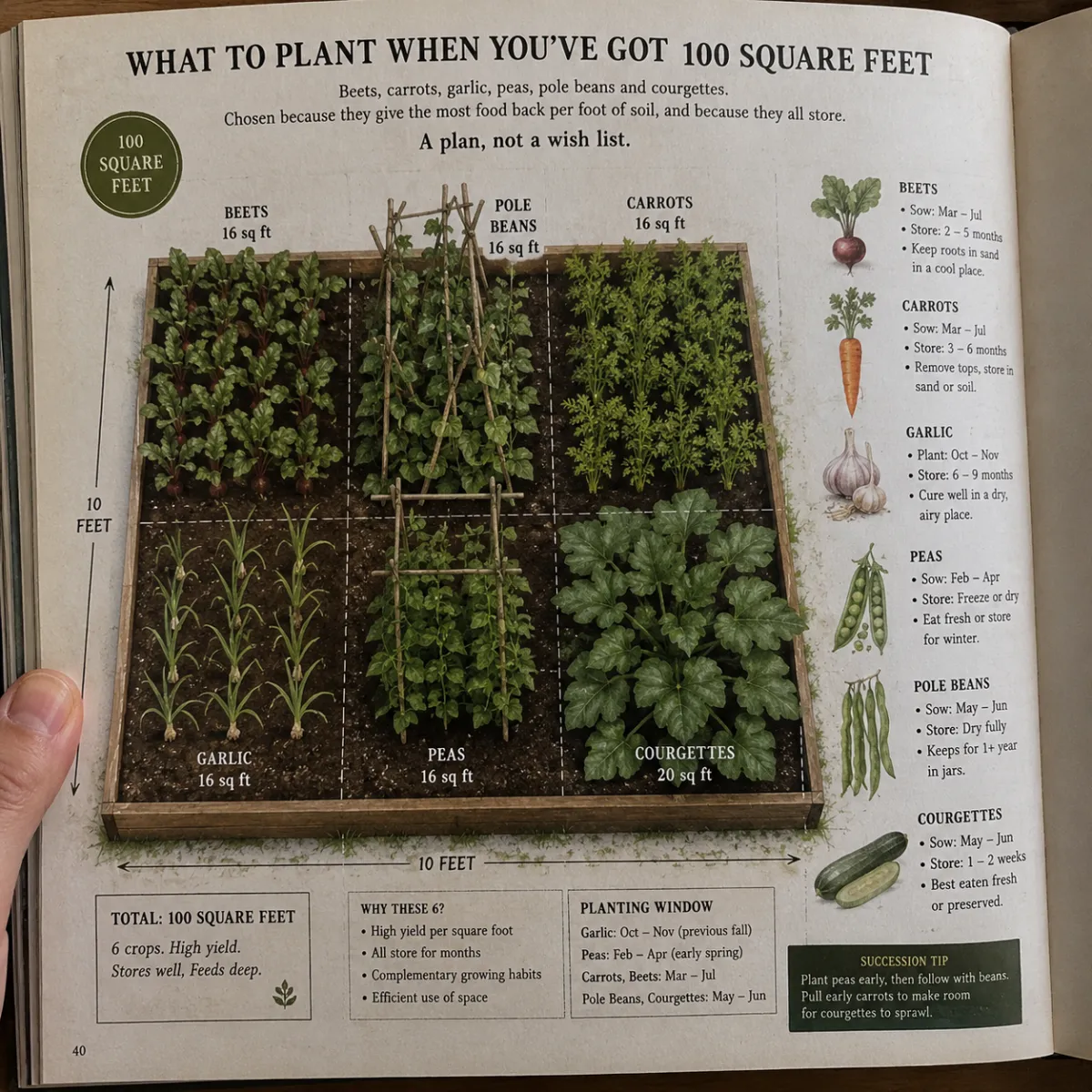
Beets, carrots, garlic, peas, pole beans and courgettes.
Chosen because they give the most food back per foot of soil, and because they all store.
A plan, not a wish list.
The 9 Brassicas and Fruiting Vegetables Most Worth Your Ground
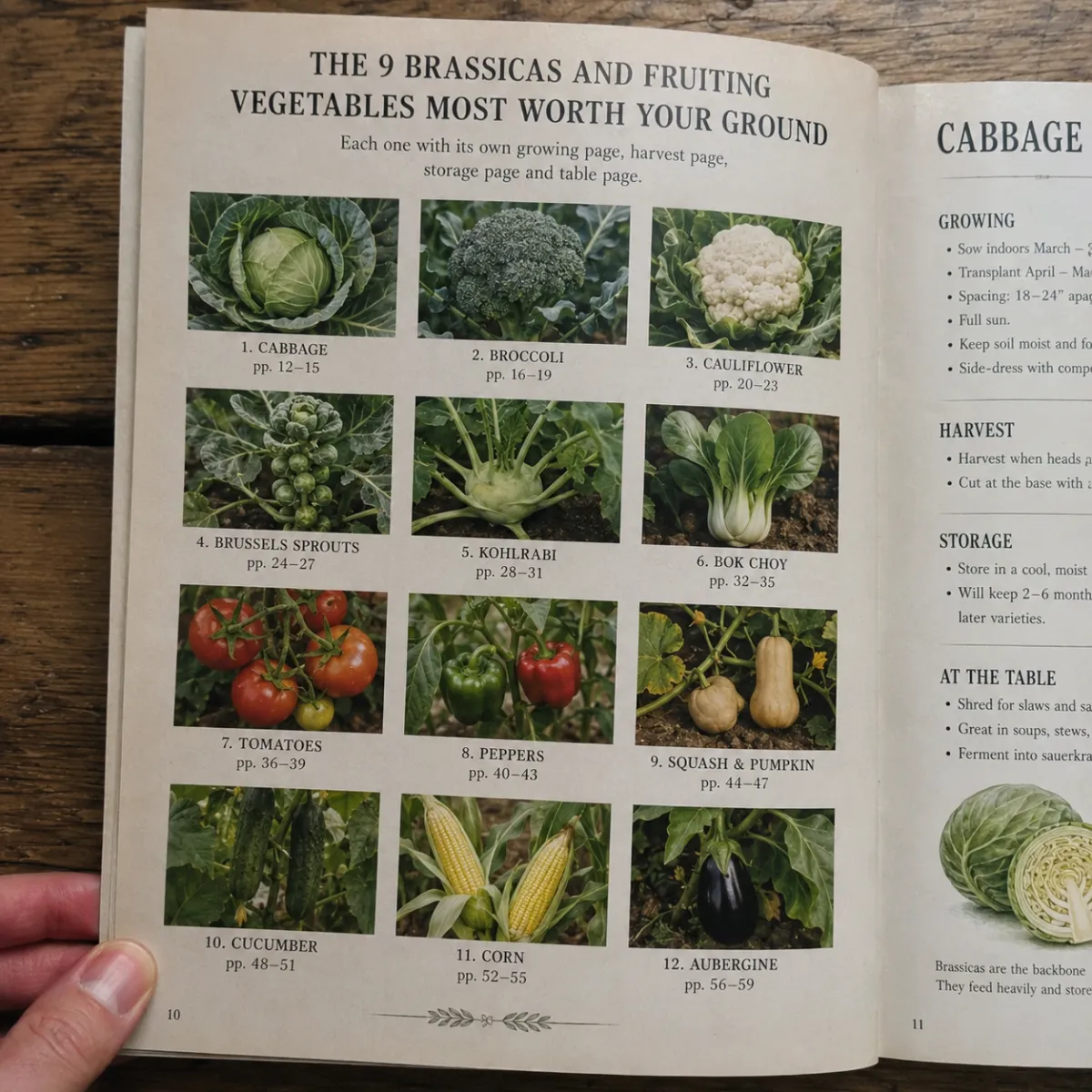
Cabbage, broccoli, cauliflower, brussels, kohlrabi, bok choy.
Tomatoes, peppers, squash, pumpkin, cucumber, corn, aubergine.
Every one with its own growing page, harvest page, storage page and table page.
The Fats and Oils That Keep for Years
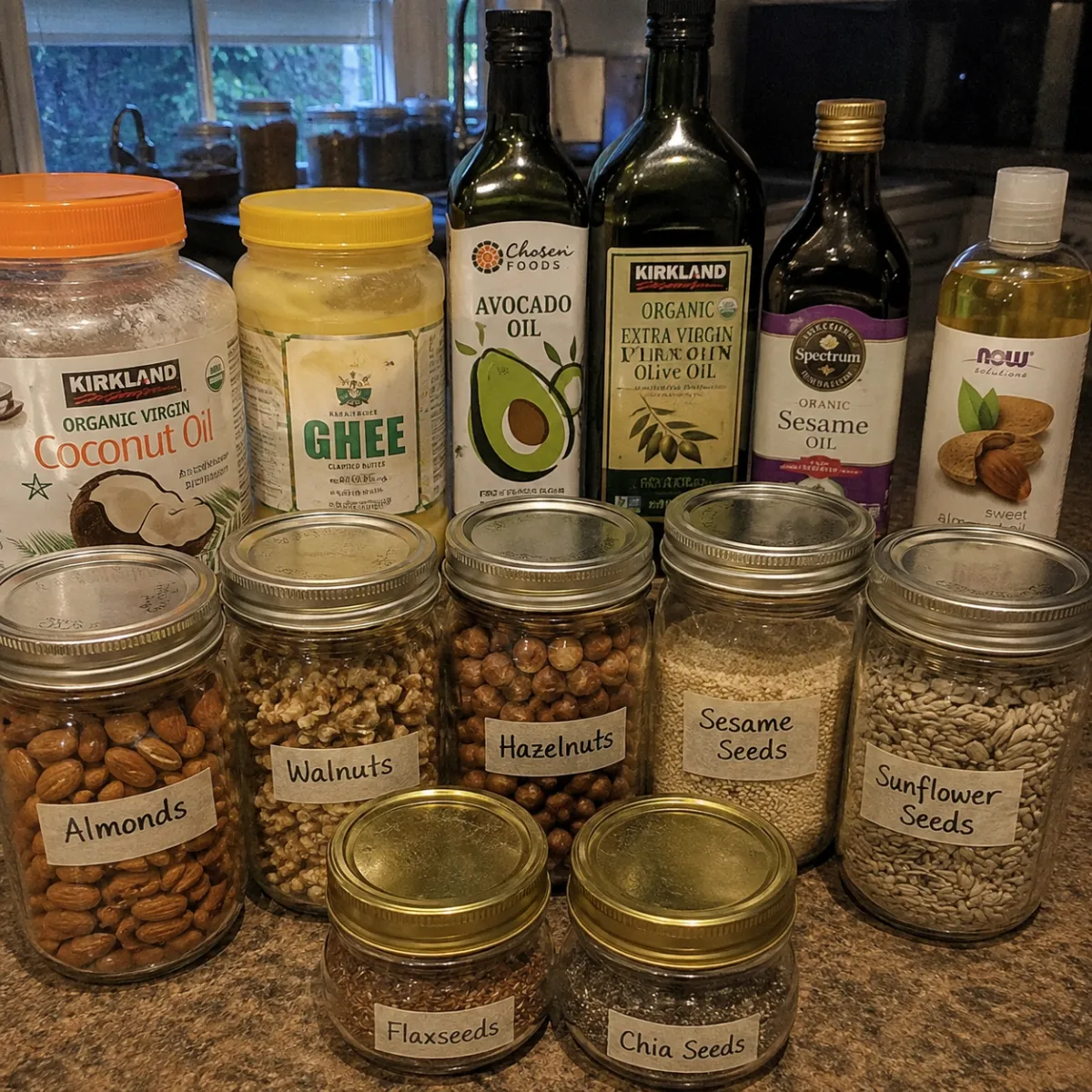
Coconut oil and ghee behave completely differently to the nut and seed oils beside them on the shelf.
Almonds, walnuts, hazelnuts, sesame, sunflower, flaxseed, chia — all with different lifespans.
Get this wrong and you'll open a jar of something rancid at exactly the wrong moment.
The Traditional Uses Nobody Handed to Us
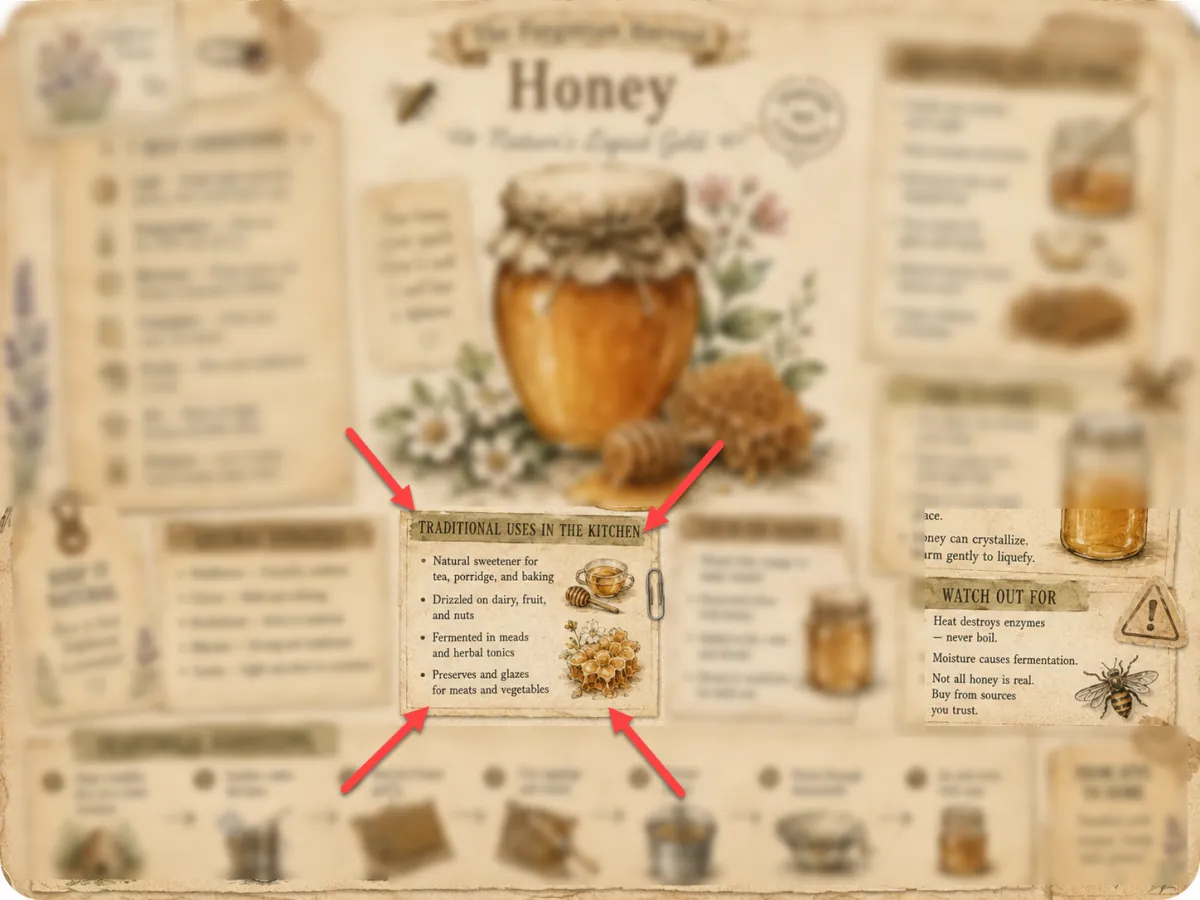
Every one of the 100 foods has a page on how it was actually used — in the kitchen, in the pantry, and in the home.
Not recipes...
Actual uses.
The difference is the difference between owning a cookbook and knowing how to cook.
The Nutrient Panel on Every Single Food
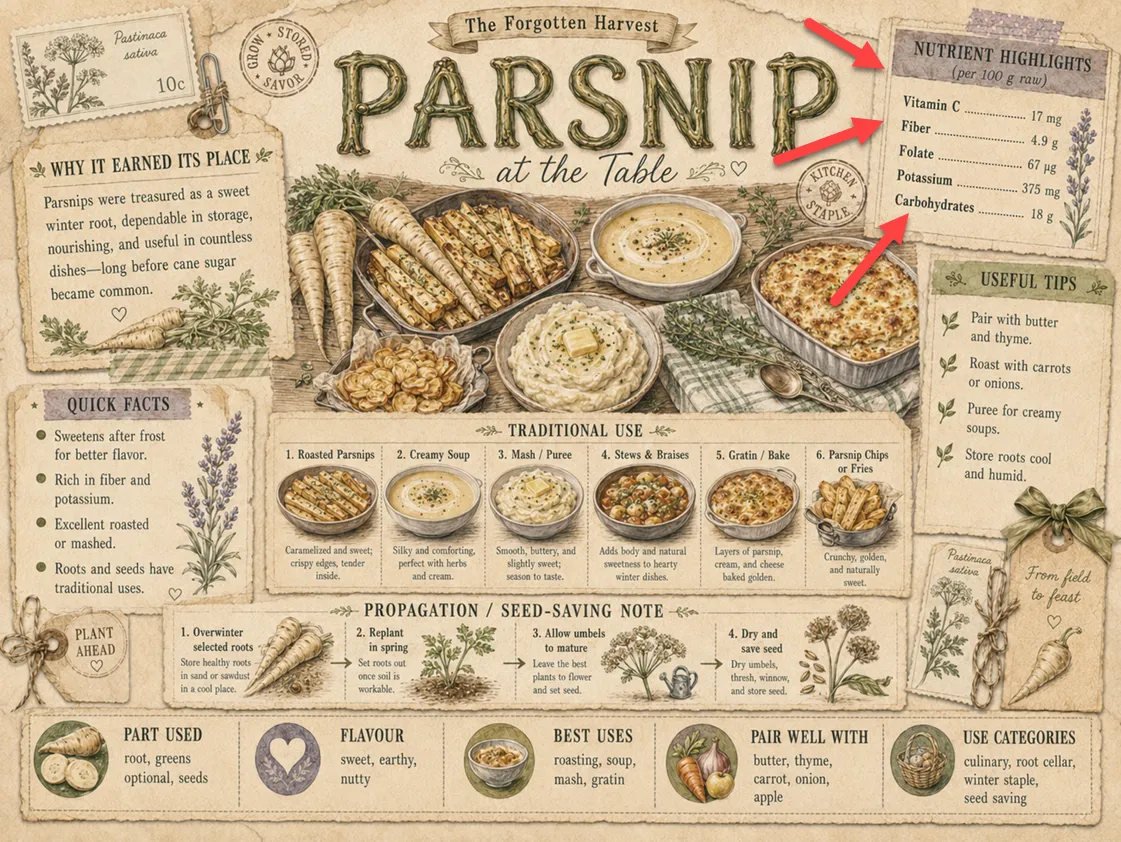
Vitamins, minerals, fibre, per 100g, plainly laid out.
So whether you're choosing what to plant or what to buy, you can see exactly what you're getting.
No marketing or "superfood" labels.
Just the numbers.
The Seed-Saving Note On Every Page
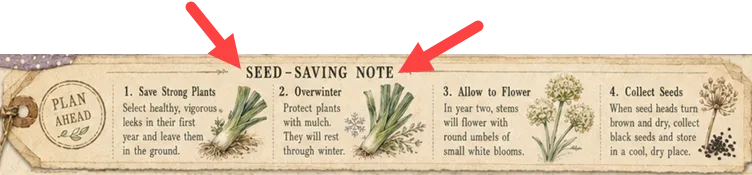
Most foods in this book will give you next year's seed for free — if you know which ones and when to let them run.
Every food page ends with a plain four-step saving note.
That's the difference between buying a garden every spring and owning one.
The 5 Storage Numbers Printed on Every Food
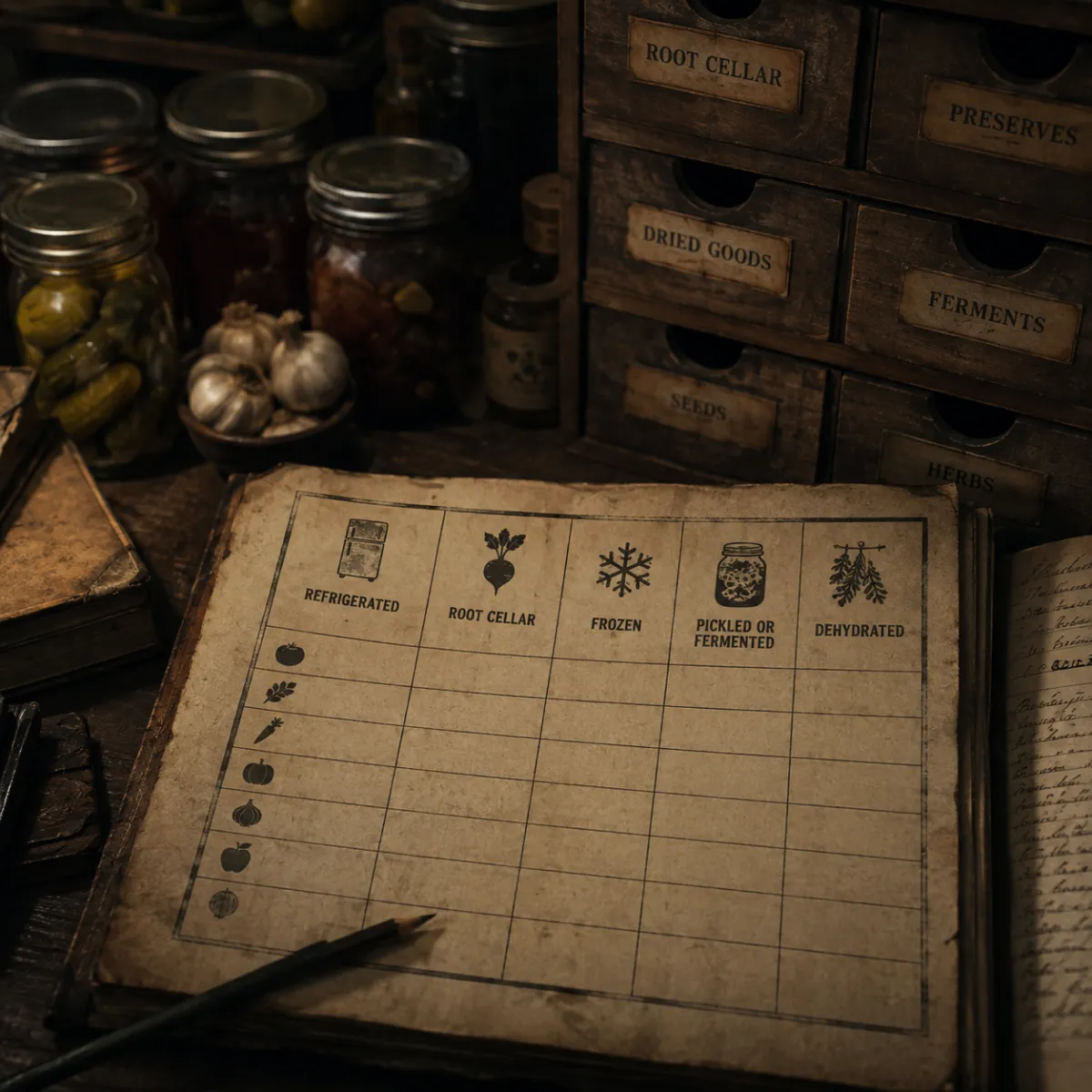
Refrigerated. Root cellar. Frozen. Pickled or fermented. Dehydrated.
Five real durations, printed in a table, for every one of the 100 foods.
So you're never guessing how long you've got.
The Windowsill, the Balcony and the Bed — Three Complete Plans
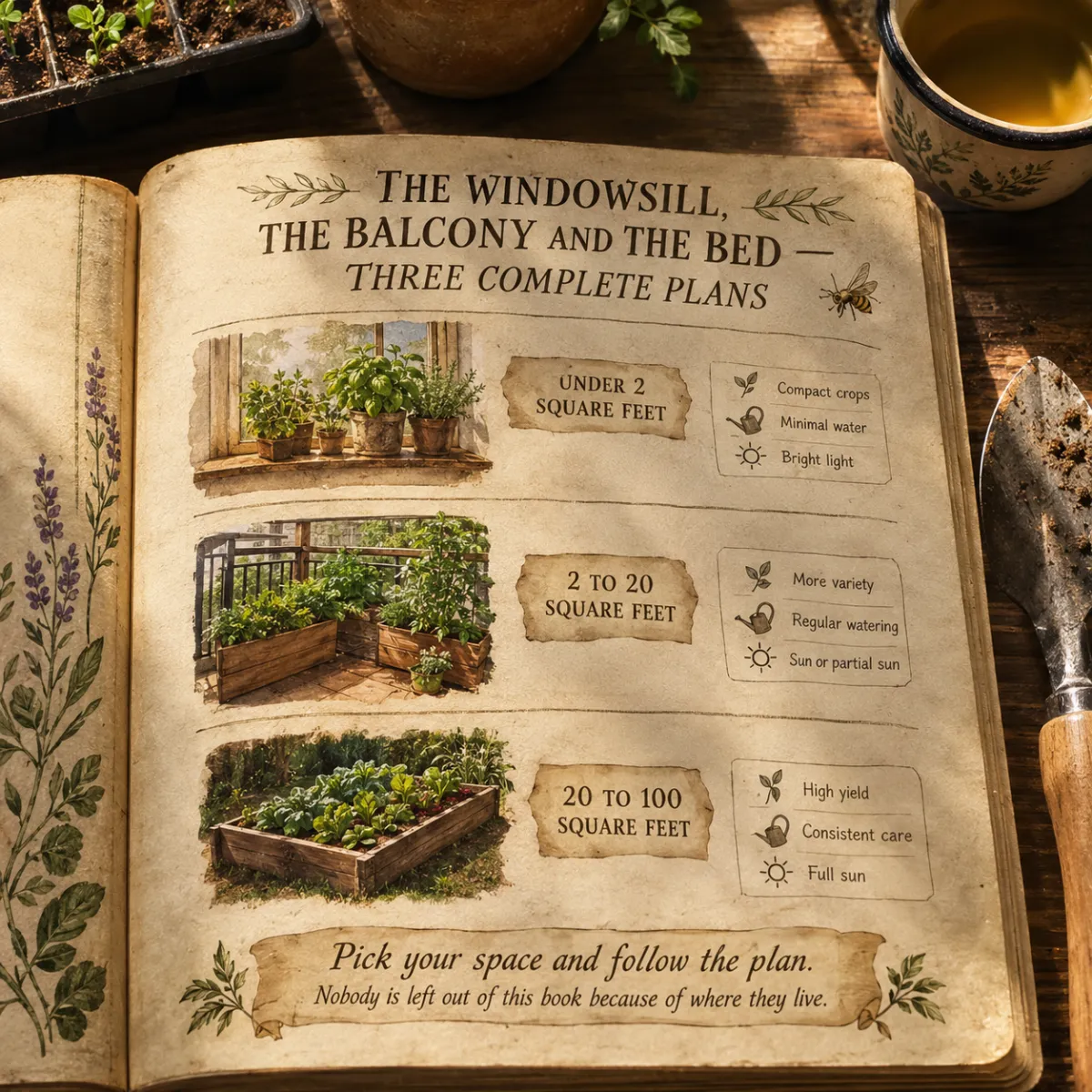
Under 2 square feet.
2 to 20 square feet.
And 20 to 100 square feet.
Pick your space and follow the plan.
Nobody is left out of this book because of where they live.
And the Whole Thing Works If You Never Plant a Thing
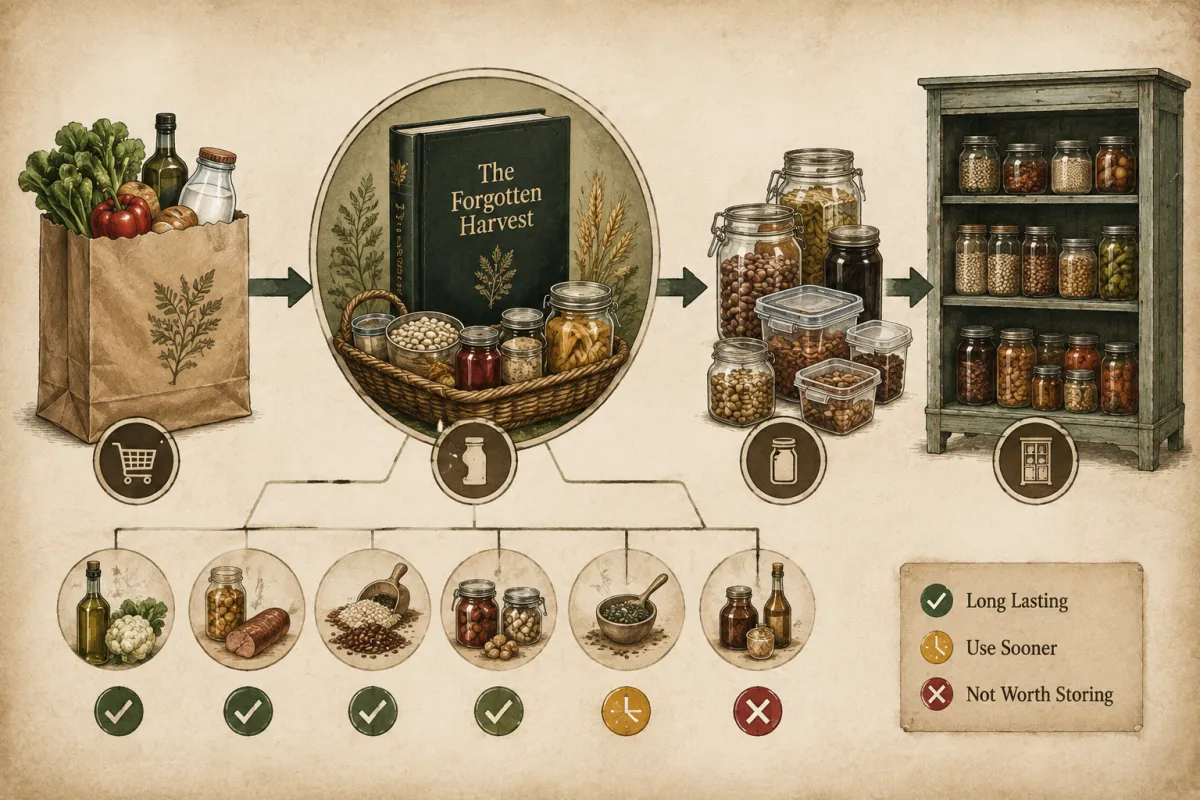
This is the part most people don't expect.
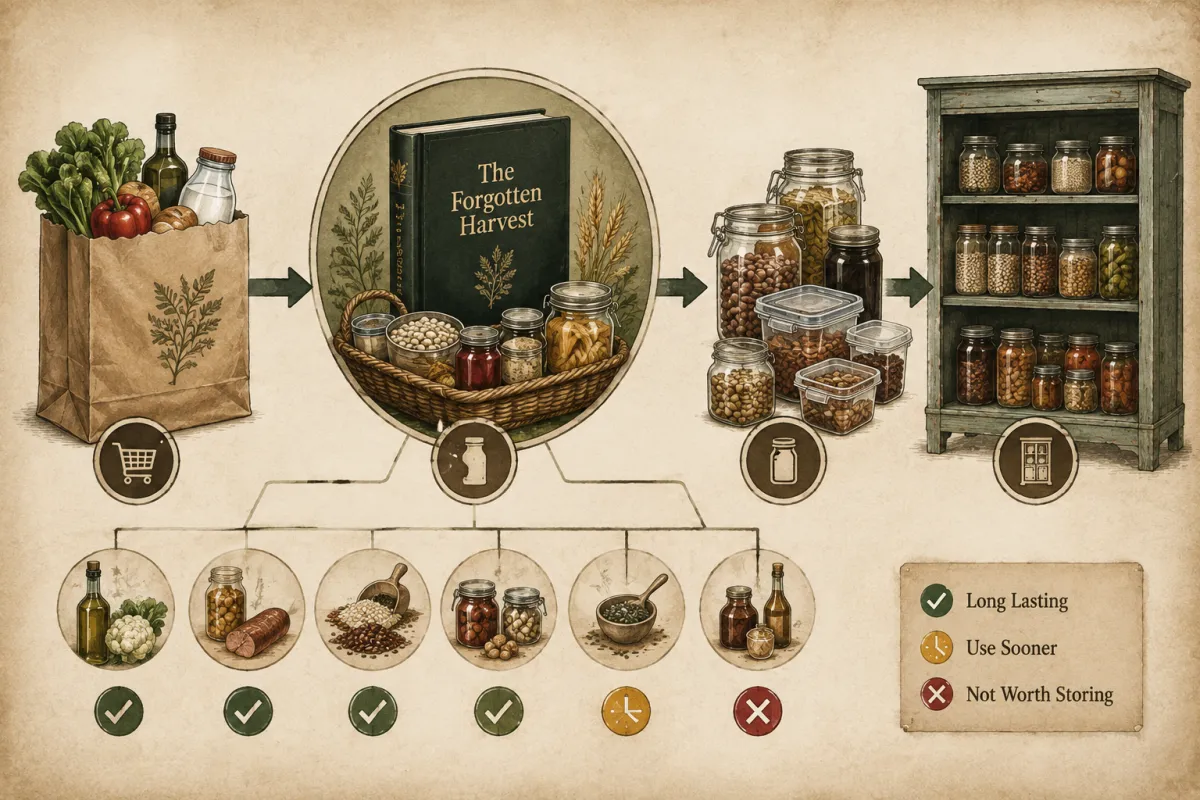
Roughly half of The Forgotten Harvest is about food you buy, not food you grow.
What lasts. What doesn't. What to seal, what to shelve, what to skip entirely.
You could put this book to work tomorrow with nothing but a trip to the supermarket and a few sealed containers.
There's Never Been a Better Time to Put This Back on Your Shelf
You can keep renting your security from the supermarket.
One rising receipt at a time.
Never quite sure what's in the food.
Never quite sure what you'd do if the shelf sat empty for a fortnight.
Or you can own the whole map.
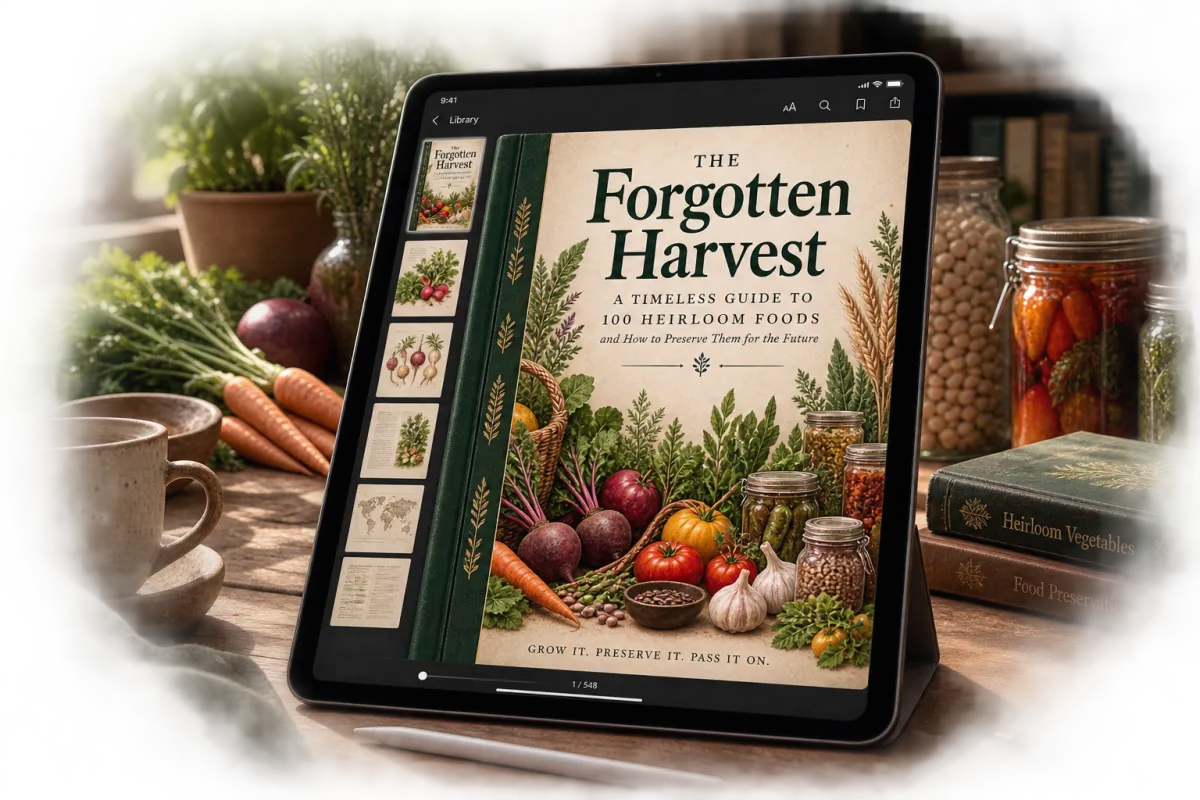
All 100 foods. All 548 pages. Every method, every bonus, every page illustrated.
For a one-time payment of $27.
That's less than one forgettable trip to the grocery store.
For knowledge that doesn't expire, can't be recalled, and belongs to you the moment you claim it.
And You Risk Nothing to See It

Read every page. Try the methods. Put up a jar of eggs and see for yourself.
If The Forgotten Harvest doesn't deliver — or you simply want your money back — email me any time inside 60 days and I'll return every cent.
You don't have to give a reason.
You don't have to answer a single question.
And you keep both bonuses either way.
That's two full months to put this to the test, at my risk instead of yours.
That's my plain promise, and I stand behind it.
Here's What You're Getting Today
The Complete Soil-to-Table Map — 100 Foods, 396 Pages Every food across four illustrated pages: identity and origin, growing, harvest and storage, and the table.
Nine groups — roots, alliums, leafy greens, brassicas, fruiting vegetables, legumes, grains and seeds, fruits, and herbs.
The Root-Cellar Method — The damp-sand system for carrots, beets, celeriac, parsnips, rutabaga and turnips. Up to six months, no electricity.
The Water-Glassing Method — Eggs kept fresh at room temperature for up to eight months, in four step-by-step pages.
The Onions & Garlic Braiding and Curing Guide — Six alliums, cured and braided the old way, for six to eight months of storage.
Cut-and-Come-Again Greens — Ten greens that regrow after every cutting, with the cutting height and regrowth window for each.
The No-Garden Path — Thirty-three pages on building a full larder from a supermarket. Sorted into 2–5 year, 5–10 year, and 25–30 year storage.
Summer Fruits That Dry Well —Fifteen fruits and fruit combinations, dried into sheets that keep up to a year.
Herbs & Plants of the Home Apothecary — Twenty-two plants, each with its traditional preparation, drying and storage method, and honest cautions.
The Small-Space System — Three complete plans: windowsill, balcony, and small bed.
The Seasonal Calendar — Twelve months. What to sow, tend, harvest and put up, one page at a time.
You're Also Getting Two Free Bonuses
Bonus One — The Small-Space Larder
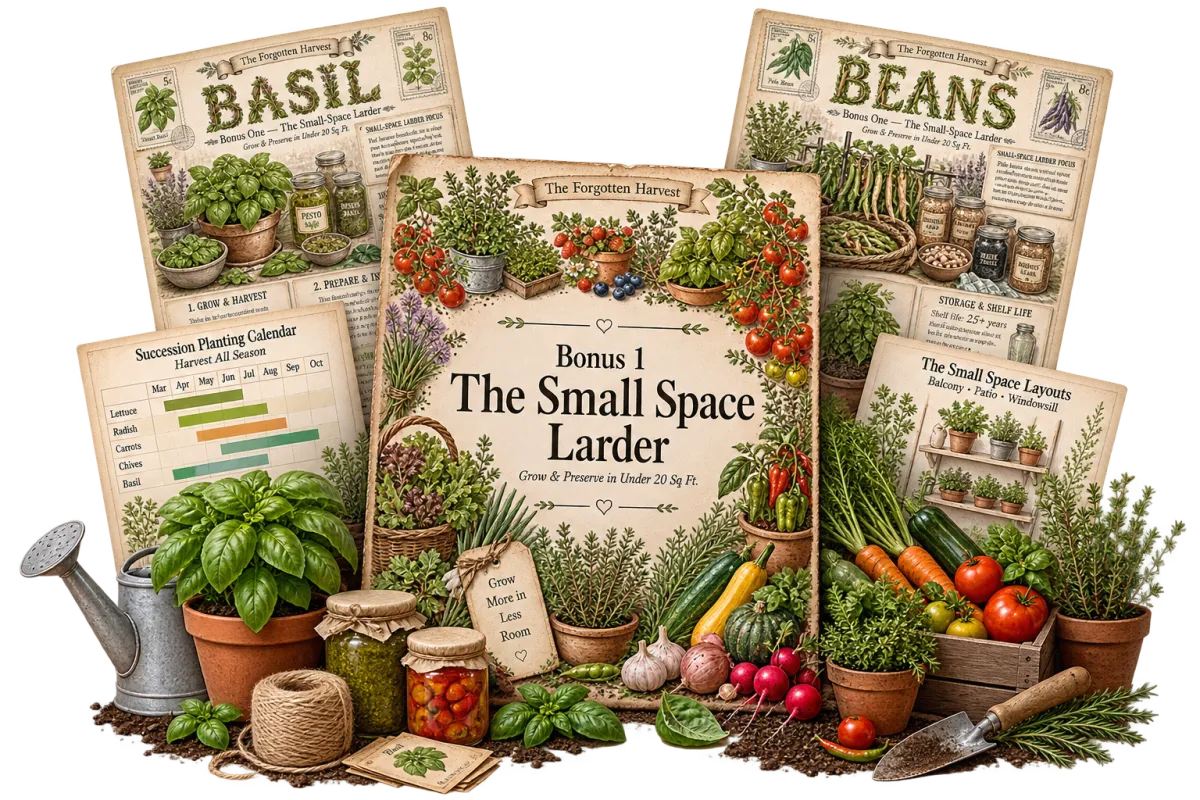
Fourteen pages on growing and preserving real food with almost no room and almost no cost.
Basil, beans, calendula, cherry tomatoes, chilli, elderberry, garlic, kale, mint, onion, rosemary, sage, spinach and thyme.
Proof that a windowsill and the right knowledge beats an acre and none.
Bonus Two — The Home Apothecary Companion

The simple teas, tonics and infusions our great-grandparents made from the very plants in the main guide.
So the knowledge doesn't sit on a shelf.
It goes to work in your kitchen this week.
Get Instant Access To The Forgotten Harvest + The Two Exclusive Bonuses Today
On Your Shelf Today. On Your Table All Year.
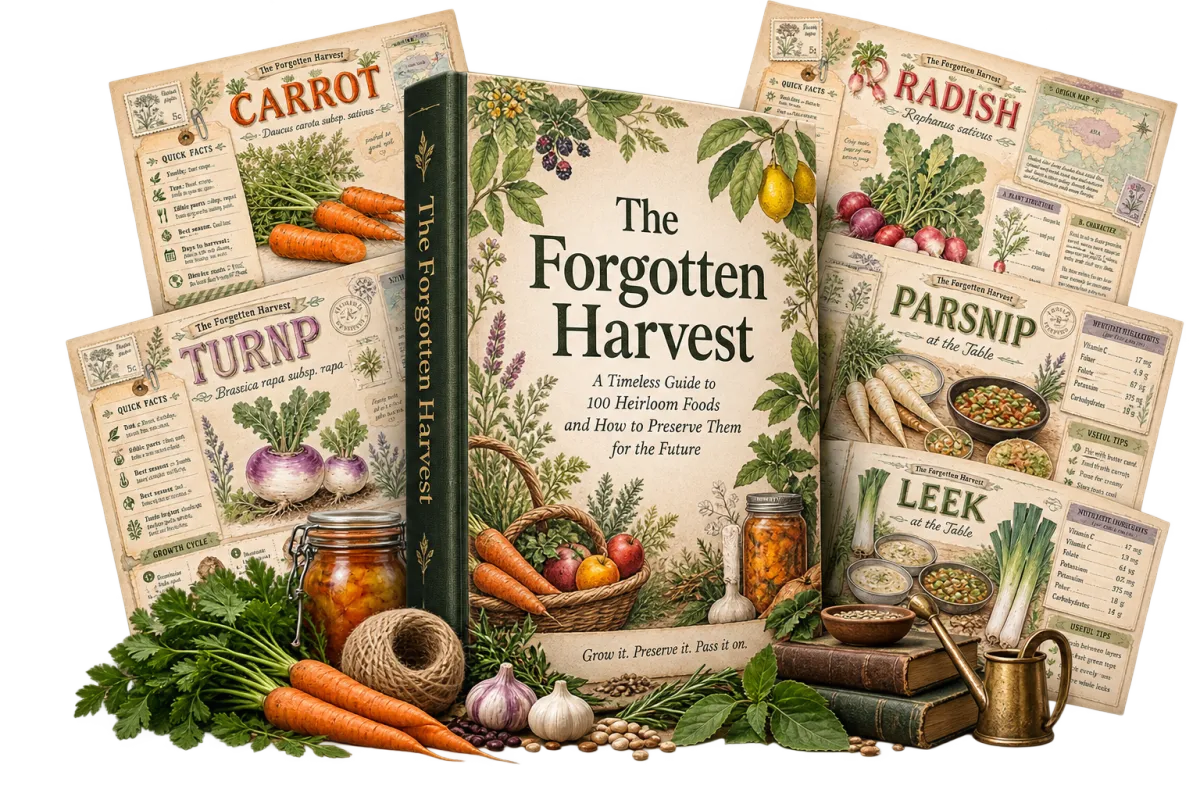
The households that ran on this knowledge never worried about what was on the shop shelf.
Not because times were easier.
Times were far harder.
They didn't worry because they knew.
They knew which foods to grow, when to pull them, how to keep them, and what to do with them in February when nothing was growing.
That knowing is what we've spent two years putting back together, page by page, in 548 illustrated pages.
It's yours for $27.
Put the harvest back where it belongs — on your shelf today, and on your table all year.
God bless,
The Forgotten Harvest team